Q32 · 9700/42/F/M/22 Q2
Worked solution from the Genetic technology Theory (Paper 4) booklet, Part 2 of 3.

Worked solution
(a)(i)
Mitochondria make ATP, so think about what needs ATP in an axon.
With no free movement, less ATP reaches the sodium-potassium pump (active transport of Na+ and K+). [1]
So the resting potential is not re-established, and the transmission of the action potential along the axon is reduced. [1]
(a)(ii)
Compare each person with the expected range. Median nerve: 50–65 m s−1. Peroneal nerve: 40–45 m s−1.
GAN decreases the speed of nerve impulses in both nerves (arm and leg): the speeds are lower than the expected range. [1]
Use figures: mean median nerve = (47 + 39 + 43) ÷ 3 = 43 m s−1; mean peroneal nerve = (44 + 22 + 28) ÷ 3 = 31.3 m s−1, both below the expected range. [1]
(a)(iii)
Link slow impulses to the muscles.
Impulses take longer to reach the neuromuscular junction (muscles), so muscles contract more slowly. [1]
This gives reduced muscle control, so the person walks slower, stumbles or trips (reflexes are also slower). [1]
(b)
Discuss each conclusion using Fig. 2.1. Mean time balanced at 18 to 23 months: mice without GAN 122 → 153 s; GAN with gene therapy 128 → 56 s; GAN with no therapy 114 → 52 s.
Conclusion 1, a benefit: justified. Mice with therapy have a slower decline in balance time from 18 to 20 months (128 to 88 s, but 114 to 40 s with no therapy) and a longer balance time. [1]
Conclusion 1, not a cure: justified. At 23 months both GAN groups have a similar balance time (about 56 and 52 s), and the treated mice show a downward trend and a shorter time than mice without GAN (153 s). [1]
Conclusion 2, not affected by age: not justified. Mice without GAN increase their balance time (122 to 153 s), and balance time decreases with age in mice with GAN. [1]
Support with comparative figures from the graph (or say a statistical test is needed). [1]
Official mark scheme

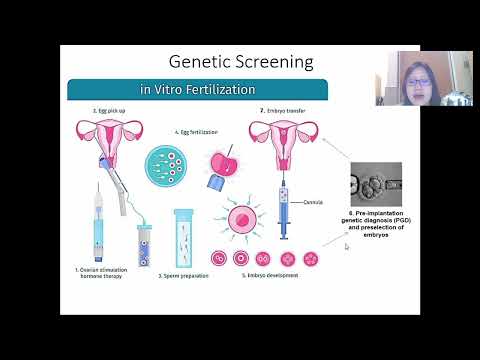 ▶ Topic lesson
A lesson on this topic · by Ms Beh @behlogy | Cambridge A Level Biology (9700). Tap the picture to open it on YouTube.
Solutions follow the official Cambridge mark schemes; marks are shown in grey. Videos are from other YouTube channels. Paper codes read component / series / year: M/J = May/June, O/N = October/November. Past-paper questions © UCLES, reproduced for classroom practice.