Q34 · 9708/42/F/M/25 Q1
Worked solution from the International economic issues Theory (Paper 4) booklet, Part 4 of 6.

Worked solution
(a)
Write: an optimum population is the size of population which, with the existing natural resources / factors of production and given technology, [1]
yields the highest income per capita (the standard of living is at a maximum). [1]
(b)
Write the changes in population structure, then use Fig. 1.1 for the statement.
The birth rate declined between 1970 and 2020. [1]
So the population became older (an ageing population). [1]
So the dependency ratio increased (more dependants for each person of working age). [1]
Fig. 1.1 shows the population still growing, only at a slower rate, up to 2020, so it was not decreasing. [1]
So Fig. 1.1 does not support the statement that 'its population is decreasing'. [1]
(c)
Identify two observations, and analyse the effect of each on GDP.
Observation 1: smaller numbers of younger people. [1]
This means a smaller pool of potential innovators and would-be entrepreneurs, [1]
so output and productivity fall, a negative effect on GDP. [1]
Observation 2: an increase in the relative numbers of older people. [1]
This raises spending on providing social services, [1]
and more spending on transfer payments, which increases the budget deficit and has a negative impact on GDP. [1]
(d)
Consider each policy, then give a conclusion.
One-child policy: it was based on the view that China's population was above its optimum and needed to move from an economy based on the size of its workforce to one based on skills. [1]
It did cut the rate of population increase, but it left an increasingly dependent population [1]
and a possible fall in savings and investment, so a fall in long-run AS and AD. [1]
Two-child policy (2016): it aimed at economic growth and a move back towards the optimum population, based on the view that China needs a young, skilled workforce helped by technology. [1]
This would make China more internationally competitive [1]
and lead to a rise in AD and AS in the long run. [1]
Conclusion: the estimates in Fig. 1.1 suggest the intended effects of the two-child policy are unlikely to be achieved. [1]
Official mark scheme

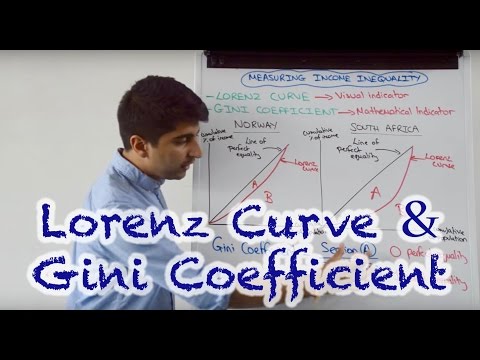 ▶ Topic lesson
A lesson on this topic · by EconplusDal. Tap the picture to open it on YouTube.
Solutions follow the official Cambridge mark schemes; marks are shown in grey. Videos are from other YouTube channels. Paper codes read component / series / year: M/J = May/June, O/N = October/November. Past-paper questions © UCLES, reproduced for classroom practice.