Q101 · 9700/12/F/M/21 Q20
Worked solution from the The mitotic cell cycle MCQ booklet.

Worked solution
The question asks for the parts of a chromosome from the fewest to the most in a human white blood cell.
A human cell has 46 chromosomes, so there are 46 centromeres. Once the DNA has been copied, each chromosome has two chromatids, so there are 92 chromatids, which is more than the centromeres.
Histone proteins are far more numerous than either, because many histones are bound along each DNA molecule.
So the order is centromere, chromatid, histone protein.
So the answer is A.
B has telomeres (at least 92) before centromeres (46), so it is not rising. C puts histones first, but they are the most numerous. D puts telomeres first, but each chromatid has two, so telomeres outnumber centromeres and chromatids.
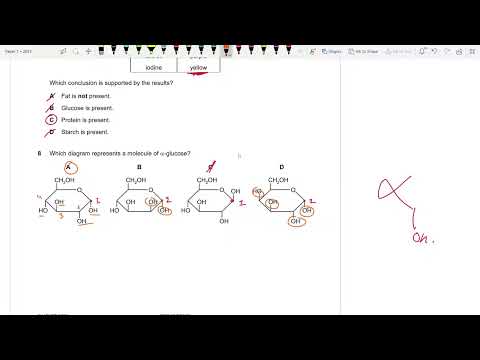 ▶ Whole paper
Video solution of the whole paper · by CAIE PAPERS SOLVED. Tap the picture to open it on YouTube.
Solutions follow the official Cambridge mark schemes. Videos are from other YouTube channels. Paper codes read component / series / year: M/J = May/June, O/N = October/November. Past-paper questions © UCLES, reproduced for classroom practice.