Q14 · 2281/21/M/J/21 Q5
Worked solution from the Government and the macroeconomy Theory (Paper 2) booklet, Part 3 of 7.

Worked solution
(a)
Identify means: just name two. Write any two of these industries in the primary sector (it takes things from the ground or sea):
Mining [1]
Fishing (or forestry, or oil extraction) [1]
(b)
Explain means: give the disadvantage, then say why it happens. Write two of these:
A fall in farm output may cause a shortage of food (or famine), [1]
so the country may have to import more food and export less, which worsens the current account. [1]
Less farm output may mean unemployment increases among farm workers, [1]
especially if workers cannot easily move to other jobs (structural unemployment). [1]
Other answers that earn the marks: food prices may rise, which may increase poverty; migration from rural to urban areas puts pressure on city resources; GDP / economic growth falls if the secondary and tertiary sectors do not make up the lost output.
(c)
Analyse means: give each step of the chain of reasoning and link the steps.
Deflation is a fall in the price level. [1]
The central bank could lower the rate of interest, [1]
which reduces the reward for saving and makes borrowing cheaper, [1]
so people spend more and consumer expenditure rises. [1]
Or the central bank could increase the money supply, which increases bank lending and investment. [1]
This is expansionary monetary policy: it raises total (aggregate) demand, which causes prices to rise and firms to raise their prices. [1]
Any steps from these that make a clear chain earn the marks.
(d)
Discuss means: explain why it should, explain why it might not, then decide.
Why a firm should aim for growth: it may increase market share and market power, [1]
and it may let the firm gain economies of scale and more profit, which keeps shareholders happy. [1]
Growth may also raise the pay and job security of managers, and a bigger firm costs more, so it is harder for another firm to take it over. [1]
Why it might not: if demand is falling, survival may be a better main objective, and in a niche market growth may be unlikely. [1]
Profit maximisation, if successful, provides the funds for growth later, and a state-owned enterprise may aim at social welfare. [1]
Growth may cause diseconomies of scale, put pressure on workers (lower productivity, higher labour turnover), or make the firm easier to take over. [1]
Conclusion: write that it depends on the firm's situation, for example whether demand is rising or falling and whether it is a niche or a state-owned firm. Growth suits a firm in a growing market; survival or profit suits a firm in a falling or small market. [2]
Official mark scheme

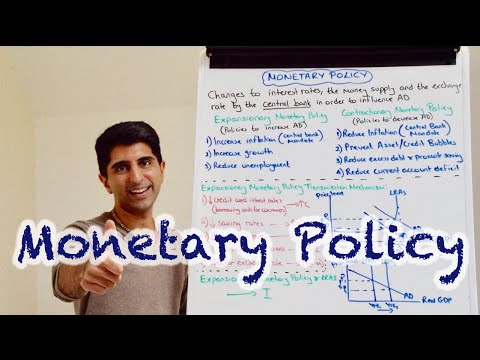 ▶ Topic lesson
A lesson on this topic · by EconplusDal. Tap the picture to open it on YouTube.
Solutions follow the official Cambridge mark schemes; marks are shown in grey. Videos are from other YouTube channels. Paper codes read component / series / year: M/J = May/June, O/N = October/November. Past-paper questions © UCLES, reproduced for classroom practice.