Q11 · 2281/21/M/J/24 Q3
Worked solution from the International trade and globalisation Theory (Paper 2) booklet, Part 2 of 4.

Worked solution
(a)
Write: in a mixed economic system resources are allocated by firms (the private sector) [1]
and by the government (the public sector). [1]
(b)
Explain two benefits. Give the benefit, then say why. Any two of these:
Higher demand (more consumers, a larger market) [1]
which may increase revenue and profits. [1]
Greater ability to take advantage of economies of scale [1]
so average cost of production falls. [1]
Or: a larger supply of labour makes it easier to employ workers, may lower wages and can increase output.
Mark note: one mark for each of two benefits and one mark for each of two explanations.
(c)
Analyse means: give each step of the chain of reasoning and link them. Use any of these chains:
Stable prices give consumers confidence to buy [1]
because prices stay affordable. [1]
Stable prices attract MNCs, which leads to more employment, [1]
and firms and the government can plan the use of resources better, [1]
which raises investment [1]
and economic growth. [1]
Stable prices avoid inflation, which can discourage investment, make exports less price competitive and imports more so, and may cause a current account deficit. (Inflation also causes a random redistribution of income, menu costs and shoe leather costs.)
Stable prices also avoid deflation, where consumers and firms delay purchases, causing a downward spiral of demand and prices, unemployment and a recession.
Mark note: these are examples; any six linked points from these chains earn the 6 marks.
(d)
Discuss means: explain why it might, explain why it might not, then decide.
Why it might: air travel may create employment in the air travel industry and in related industries such as tourism, [1]
may cut firms' costs of production if it is quicker than other transport, and may raise the mobility of labour, [1]
and it is safer than some transport, and encourages the economic development of some countries. [1]
Why it might not: it may cause noise and air pollution (carbon footprint) and contribute to climate change, [1]
new airports may use up land that could be used for housing, [1]
it may reduce demand for other transport, so unemployment may rise in, for example, sea travel, and high costs stop heavy goods moving by air. [1]
Conclusion: it depends on how the benefits of jobs and trade compare with the environmental and other costs. [1]
Say which side you think is stronger and why, for example that the global economy gains from jobs and trade but needs the pollution costs controlled. [1]
Official mark scheme

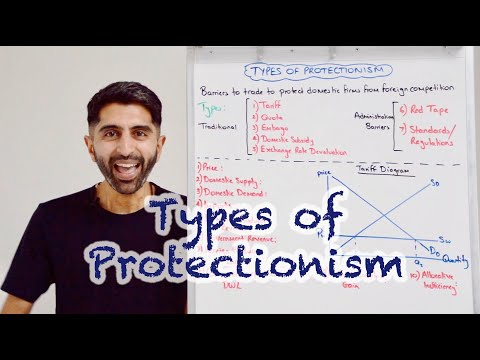 ▶ Topic lesson
A lesson on this topic · by EconplusDal. Tap the picture to open it on YouTube.
Solutions follow the official Cambridge mark schemes; marks are shown in grey. Videos are from other YouTube channels. Paper codes read component / series / year: M/J = May/June, O/N = October/November. Past-paper questions © UCLES, reproduced for classroom practice.