Q8 · 9700/42/O/N/20 Q10
Worked solution from the Energy and respiration Theory (Paper 4) booklet, Part 2 of 2.

Worked solution
(a)
Describe the steps in order. Write any nine of these:
Glycolysis happens first. [1]
Glucose is phosphorylated by ATP. [1]
This makes fructose bisphosphate. [1]
Lysis: it splits to form 2 × triose phosphate. [1]
Triose phosphate has hydrogen removed (is dehydrogenated or oxidised). [1]
Reduced NAD is formed. [1]
4 × ATP made, net 2 ATP, by substrate-linked phosphorylation. [1]
The pyruvate enters the mitochondrial matrix for the link reaction. [1]
Pyruvate is decarboxylated (carbon dioxide removed) and dehydrogenated (oxidised), then combines with coenzyme A to make acetyl CoA. [1]
(b)
Write any six of these:
Reduced NAD or reduced FAD release hydrogen. [1]
This happens on the inner membrane (cristae). [1]
Hydrogen splits into H+ and e–. [1]
Electrons pass along a chain of carriers (the electron transport chain). [1]
Energy released is used to pump H+ into the intermembrane space, giving a high concentration of H+ (proton gradient). [1]
H+ diffuse back into the matrix through ATP synthase, which makes ATP: this is chemiosmosis. [1]
Official mark scheme

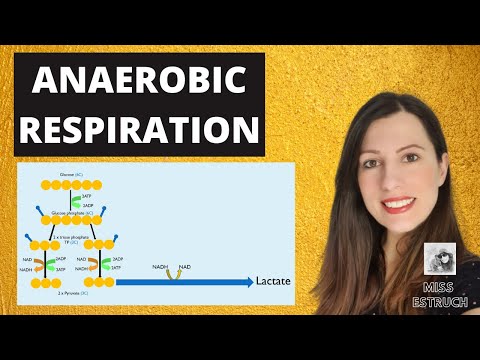 ▶ Topic lesson
A lesson on this topic · by Miss Estruch Biology. Tap the picture to open it on YouTube.
Solutions follow the official Cambridge mark schemes; marks are shown in grey. Videos are from other YouTube channels. Paper codes read component / series / year: M/J = May/June, O/N = October/November. Past-paper questions © UCLES, reproduced for classroom practice.