Q2 · 5090/21/O/N/21 Q7
Worked solution from the Inheritance Theory (Paper 2) booklet, Part 1 of 4.

Worked solution
(a)
Explain how characteristics pass from parents to offspring. Any six of these:
The nucleus contains chromosomes. [1]
Chromosomes are made of DNA (genetic material). [1]
They carry genes (alleles). [1]
Genes code for proteins, and the proteins determine characteristics. [1]
Gametes are made by meiosis (reduction division), which gives haploid cells with half the chromosomes. [1]
At fertilisation the gametes fuse, giving a mix of genetic material (genes and chromosomes) from both parents. [1]
(b)
Radiation can damage DNA in the sex cells. Any four of these:
It increases the chance of mutation. [1]
A mutation can be a change in gene structure (base sequence) or chromosome number. [1]
The changed gene may code for a new, different or incorrect protein. [1]
This may result in new beneficial variation, or in genetic disease such as sickle-cell anaemia. [1]
Official mark scheme

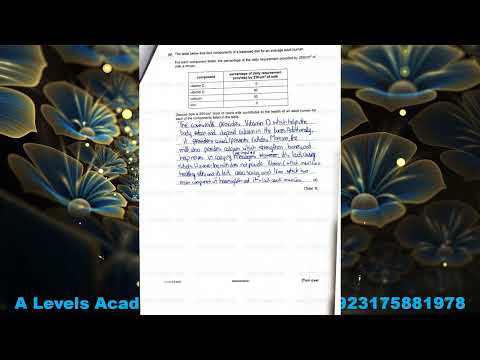 ▶ Whole paper
Video solution of the whole paper · by A Levels Academy Islamabad. Tap the picture to open it on YouTube.
Solutions follow the official Cambridge mark schemes; marks are shown in grey. Videos are from other YouTube channels. Paper codes read component / series / year: M/J = May/June, O/N = October/November. Past-paper questions © UCLES, reproduced for classroom practice.