Q29 · 9700/42/F/M/21 Q10
Worked solution from the Genetic technology Theory (Paper 4) booklet, Part 2 of 3.

Worked solution
(a)
The question asks what bioinformatics is, and what it does after genomes are sequenced. Give six points.
Bioinformatics is the analysis of biological data using computer software. [1]
It uses databases of gene / DNA / protein / amino acid sequences. [1]
These are large databases, so work is fast, accurate and efficient. [1]
Data can be shared / pooled between scientists. [1]
Software can compare sequences (an analytical tool such as BLAST) and predict amino acid sequences or protein structure from DNA sequence data. [1]
It is used to find ways to control parasites, for example designing a vaccine. (Other creditable points: personalised medicine, identifying new diseases, common ancestors / phylogenetic analysis, finding new species.) [1]
(b)
The question asks how a microarray shows which genes are active in a tissue. Write the steps in order.
A microarray has probes made of single-stranded DNA. [1]
Each probe is unique to a particular gene, and the array has thousands of different genes. [1]
Extract mRNA from the tissue sample. [1]
Use the mRNA as a template to make cDNA. [1]
This uses reverse transcriptase (reverse transcription). [1]
The cDNA is linked to a fluorescent dye. [1]
The cDNA is added to the microarray, and it binds (hybridises) to the probes by complementary base pairing. [1]
Excess cDNA is washed off, then the array is exposed to UV light / laser. [1]
Fluorescence shows which genes are expressed, and the intensity of fluorescence shows the level of gene expression. [1]
Official mark scheme

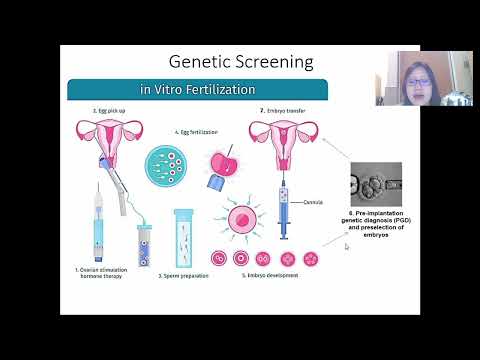 ▶ Topic lesson
A lesson on this topic · by Ms Beh @behlogy | Cambridge A Level Biology (9700). Tap the picture to open it on YouTube.
Solutions follow the official Cambridge mark schemes; marks are shown in grey. Videos are from other YouTube channels. Paper codes read component / series / year: M/J = May/June, O/N = October/November. Past-paper questions © UCLES, reproduced for classroom practice.