Q14 · 0620/21/M/J/21 Q10
Worked solution from the Electrochemistry MCQ booklet.

Worked solution
Concentrated aqueous sodium chloride and molten lead(II) bromide are both electrolysed. We need what happens in both.
Concentrated aqueous sodium chloride: chlorine forms at the anode and hydrogen at the cathode.
Molten lead(II) bromide: bromine forms at the anode and lead at the cathode.
The only thing both share is that a halogen (chlorine or bromine) forms at the anode.
So the answer is A.
B is wrong because the aqueous solution gives hydrogen, not a metal. C is wrong because hydrogen forms at the cathode, never the anode. D is wrong because the molten salt gives lead, not hydrogen.
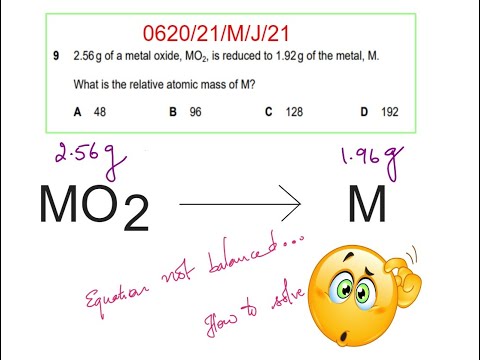 ▶ Whole paper
Video solution of the whole paper · by Learn Chem. Tap the picture to open it on YouTube.
Solutions follow the official Cambridge mark schemes. Videos are from other YouTube channels. Paper codes read component / series / year: M/J = May/June, O/N = October/November. Past-paper questions © UCLES, reproduced for classroom practice.