Q13 · 2281/22/M/J/20 Q3
Worked solution from the Government and the macroeconomy Theory (Paper 2) booklet, Part 3 of 7.

Worked solution
(a)
Write any two functions of money:
Medium of exchange [1]
Measure of value (unit of account) [1]
(Also accepted: standard of deferred payments.)
(b)
Explain two advantages. Any two of these:
Banknotes are generally acceptable, [1]
so people are prepared to accept them for products and to settle debts. [1]
Or: they are portable, [1]
because notes are light to carry around. [1]
Also accepted: divisible (notes of different denominations), recognisable (distinct features), limited in supply (the central bank prints a set number) and homogeneous (notes of the same value are identical).
(c)
Analyse means: link the steps. Two chains:
Occupational mobility is influenced by education: [1]
the more qualifications workers have, [1]
the more choice of jobs they have. [1]
Geographical mobility is influenced by the price and availability of housing: [1]
the cheaper and more available housing is, [1]
the easier it is for workers to work in other areas. [1]
Other credited influences: training (more skills make it easier to switch jobs); family ties (children at school or a partner's job may stop people moving); immigration controls for mobility between countries.
(d)
Discuss means: why it should, why it should not, then decide.
Why it should: it may reduce demand-pull inflation, as a higher rate discourages borrowing and encourages saving, so people spend less. [1]
It may reduce borrowing if people and firms are building up unsustainable debt. [1]
It may raise the exchange rate if there is downward pressure on a fixed exchange rate. [1]
It may reduce a current account deficit, as lower spending reduces imports. [1]
Why it should not: it may increase cyclical unemployment by reducing total (aggregate) demand. [1]
It may reduce the economic growth rate, because the higher cost of borrowing discourages investment in capital goods. [1]
It may raise the exchange rate and make exports less price competitive. [1]
Conclude: it depends on whether inflation or debt is the bigger problem, compared with the risk to jobs and growth. [1]
Official mark scheme

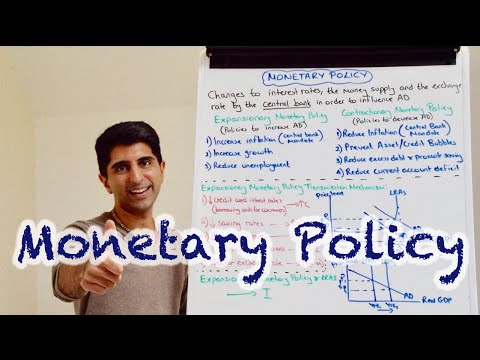 ▶ Topic lesson
A lesson on this topic · by EconplusDal. Tap the picture to open it on YouTube.
Solutions follow the official Cambridge mark schemes; marks are shown in grey. Videos are from other YouTube channels. Paper codes read component / series / year: M/J = May/June, O/N = October/November. Past-paper questions © UCLES, reproduced for classroom practice.