Q45 · 9700/41/M/J/20 Q2
Worked solution from the Genetic technology Theory (Paper 4) booklet, Part 3 of 3.

Worked solution
(a)(i)
A is epistatic: A gives white, and only aa lets B or b show. Cross AaBb × AaBb. Gametes from each parent: AB, Ab, aB, ab. [1]
Write the 16 genotypes in the Punnett square. Row AB: AABB, AABb, AaBB, AaBb. Row Ab: AABb, AAbb, AaBb, Aabb. Row aB: AaBB, AaBb, aaBB, aaBb. Row ab: AaBb, Aabb, aaBb, aabb. [1]
Phenotypes: any genotype with A is white (12 boxes); aaBB, aaBb, aaBb is yellow (3 boxes); aabb is green (1 box). [1]
Ratio = 12 white : 3 yellow : 1 green [1]
(a)(ii)
Test cross with a green plant (aabb) which only gives gamete ab.
Plant P gave half white, half yellow, so it must carry B only and be heterozygous for A: AaBB. [1]
Plant Q gave half white, half green, so it must carry b only and be heterozygous for A: Aabb. [1]
(a)(iii)
Genes on different chromosomes give new combinations of alleles.
Process: independent (random) assortment [1]
Stage: metaphase I [1]
(b)(i)
Recombinant means DNA from two different sources.
Write: Freedom II, because it contains viral (foreign) genes/DNA added to the squash genome. [1]
It is made by genetic engineering / genetic modification (GMO, transgenic). [1]
(b)(ii)
Give one of each.
Advantage: improved yield / plants do not die of disease / crop is not lost. [1]
Disadvantage: the viral proteins might cause allergies, or there may be social resistance to GM crops. [1]
Official mark scheme

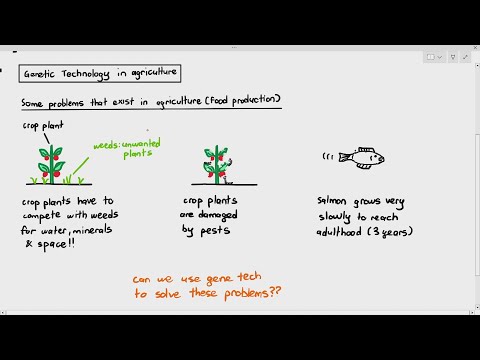 ▶ Topic lesson
A lesson on this topic · by OtterBioTutor. Tap the picture to open it on YouTube.
Solutions follow the official Cambridge mark schemes; marks are shown in grey. Videos are from other YouTube channels. Paper codes read component / series / year: M/J = May/June, O/N = October/November. Past-paper questions © UCLES, reproduced for classroom practice.