Q30 · 9708/23/M/J/22 Q3
Worked solution from the Government macroeconomic intervention Theory (Paper 2) booklet, Part 3 of 4.

Worked solution
(a)
Start with what inflation is, then explain each type.
Write: inflation is a sustained (persistent) rise [1]
in the general (average) price level. [1]
Cost-push inflation is caused by a rise in the costs of production, which shifts the AS curve to the left and raises the price level. [1]
A cause, for example a rise in wages above productivity, a rise in raw material costs, or dearer fuel imports after a depreciation of the currency. [1]
Explain why it causes inflation: firms face higher costs, so they pass them on in higher prices. [1]
Demand-pull inflation occurs when aggregate demand increases and is not matched by an increase in aggregate supply (the AD curve shifts to the right), especially at or near full employment. [1]
A cause, for example an increase in government spending, a cut in taxes causing a consumer boom, or higher export demand after a depreciation. [1]
Write the difference: demand-pull comes from too much spending pulling prices up, whereas cost-push comes from higher costs pushing prices up from the supply side. [1]
(b)
Discuss contractionary monetary policy against other policies, then decide.
Monetary policy: it works through interest rates and the money supply (and sometimes the exchange rate). A rise in the interest rate encourages saving and reduces borrowing for consumption and investment, so AD falls and inflation falls. [1]
If effective, the fall in AD reduces the rate of inflation; changes in interest rates have been the main policy used to control inflation in most countries. [1]
Disadvantage: a high interest rate raises costs and reduces investment, so it is less useful against cost-push inflation. [1]
Disadvantage: if demand is not very responsive to interest rates, the effect on inflation is small. [1]
Other policy, fiscal: raising taxes or cutting government spending reduces AD. [1]
Fiscal disadvantage: both measures come at the cost of higher unemployment. [1]
Other policy, supply-side: these can also be used, especially where there are structural weaknesses in the economy. [1]
Supply-side disadvantage: they are not a quick fix and may not reach every weakness in the economy. [1]
Evaluation: say which is best depends on the cause of inflation (demand-pull or cost-push), how quickly it must be controlled, and the side effects on unemployment and growth. [1]
Weigh the policies against each other: each works in some situations and has costs, so the best choice is not the same for every economy. [1]
Consider that a combination of policies may work better than one. [1]
Conclusion: write a justified choice, for example that contractionary monetary policy is usually the best first choice against demand-pull inflation, but not against cost-push inflation. [1]
Official mark scheme

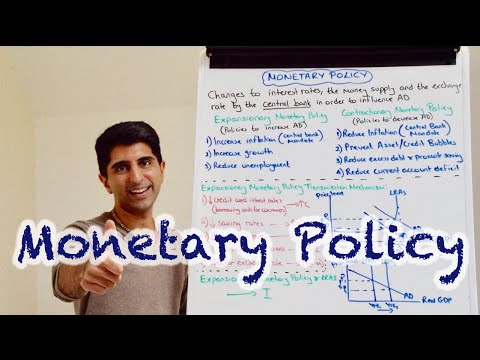 ▶ Topic lesson
A lesson on this topic · by EconplusDal. Tap the picture to open it on YouTube.
Solutions follow the official Cambridge mark schemes; marks are shown in grey. Videos are from other YouTube channels. Paper codes read component / series / year: M/J = May/June, O/N = October/November. Past-paper questions © UCLES, reproduced for classroom practice.