Q2 · 9700/41/M/J/20 Q3
Worked solution from the Genetic technology Theory (Paper 4) booklet, Part 1 of 3.

Worked solution
(a)(i)
Give any two of these.
A species is a group of (morphologically) similar organisms [1]
that interbreed to produce fertile offspring. Also accepted: they occupy the same niche. [1]
(a)(ii)
The two populations are apart and live in different habitats, so write the steps of allopatric speciation. Any five of these.
Geographical isolation of the populations. [1]
No gene flow / interbreeding between populations A and B. [1]
Different selection pressures (grassland and desert against forest). [1]
Different mutations occur in each population, and some make individuals better adapted. [1]
Those individuals survive and reproduce and pass on the advantageous alleles, over many generations. Eventually there is reproductive isolation, so the populations are separate species (allopatric speciation). [1]
(b)(i)
Gel electrophoresis sorts DNA by length. Write any two of the first four points, then the last point.
Put the DNA sample in a well at one end of the gel, and apply an electric field / current. [1]
Negatively charged DNA moves towards the anode (positive electrode), and shorter fragments move further in the same time. [1]
Compare the band positions with the known species to identify the cat. [1]
(b)(ii)
Any two of these.
The test is quicker, and cheaper (good for low income countries). [1]
It is portable (no special lab or sending samples away), and many sequences can be stored in the database (bioinformatics). [1]
Official mark scheme

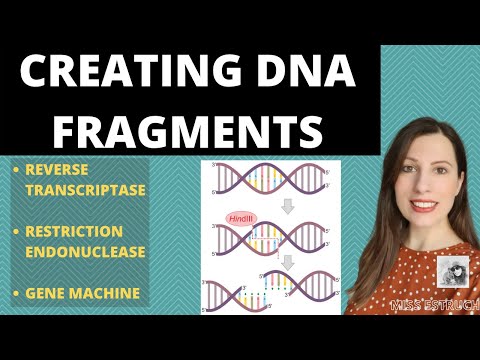 ▶ Topic lesson
A lesson on this topic · by Miss Estruch Biology. Tap the picture to open it on YouTube.
Solutions follow the official Cambridge mark schemes; marks are shown in grey. Videos are from other YouTube channels. Paper codes read component / series / year: M/J = May/June, O/N = October/November. Past-paper questions © UCLES, reproduced for classroom practice.