Q19 · 9708/22/F/M/22 Q4
Worked solution from the International economic issues Theory (Paper 2) booklet, Part 2 of 5.

Worked solution
(a)
Write: protectionism means giving an advantage to domestic industries against foreign competition [1]
by interfering with free trade (restricting imports or making domestic firms more price competitive). [1]
Method 1: a tariff (tax on imports). [1]
It raises the price of imported steel. [1]
So domestic steel becomes relatively cheaper and the domestic industry sells more. [1]
Method 2: a quota (a limit on the quantity of steel imports). [1]
It reduces the supply of imported steel, [1]
so more of the market is left for domestic producers. [1]
Other methods that score: export subsidies or subsidies to domestic producers.
(b)
Discuss means: advantages, disadvantages, then decide the overall benefit.
Advantages: the infant industry argument (a young industry needs time to grow). [1]
Protection against dumping (selling below cost) by foreign firms. [1]
It protects employment in the steel industry and the regions that depend on it. [1]
It avoids the shutdown and loss of output of the industry. [1]
Disadvantages: resources are not used in their most efficient way, [1]
because less efficient domestic firms stay in business and have less reason to improve. [1]
Other countries may retaliate with their own protection, which hurts exports. [1]
Consumers pay higher prices for steel and goods made from it. [1]
Evaluation: weigh the gains to the steel industry and its workers against the costs to consumers and other industries. It depends on how large the industry is, how long protection lasts and whether other countries retaliate. [2]
The effect on the whole economy is what counts for the overall benefit. [1]
Conclusion: protection is of overall benefit only if the gains to the industry outweigh the costs to consumers and exporters; otherwise the costs probably outweigh the gains. [1]
Official mark scheme

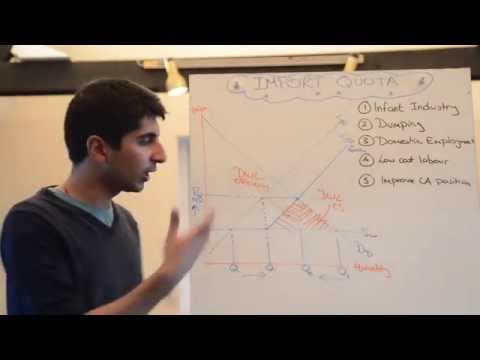 ▶ Topic lesson
A lesson on this topic · by EconplusDal. Tap the picture to open it on YouTube.
Solutions follow the official Cambridge mark schemes; marks are shown in grey. Videos are from other YouTube channels. Paper codes read component / series / year: M/J = May/June, O/N = October/November. Past-paper questions © UCLES, reproduced for classroom practice.