Q22 · 9708/21/M/J/23 Q5
Worked solution from the International economic issues Theory (Paper 2) booklet, Part 2 of 5.

Worked solution
(a)
Diagram: draw the exchange rate on the vertical axis and quantity of the currency on the horizontal axis, with a downward-sloping demand curve D and upward-sloping supply curve S meeting at the equilibrium rate. Label axes correctly. [1]
Show the demand curve shifting left to D1 and/or the supply curve shifting right to S1, with a lower equilibrium exchange rate, so the value of the currency falls. [1]
State that the value of the exchange rate falls. [1]
Causes: demand falls if foreigners buy fewer of the country's exports (so need less of the currency); supply rises if residents buy more imports or move money abroad, so more currency is sold. Use the diagram to explain how each shift lowers the rate. [1]
Advantage: a depreciation makes exports cheaper abroad and imports dearer, which can help the economy sell more. [1]
Disadvantage: imports become dearer, which raises costs and prices. [1]
Evaluation: whether the benefits always outweigh the disadvantages depends on the situation. [1]
Conclusion: a depreciation is not always beneficial; the gains and losses must be weighed. [1]
(b)
Assess means: weigh the arguments for protectionism against the arguments against it, then judge.
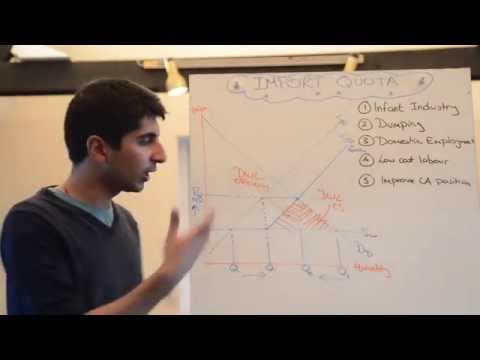
Arguments for protectionism: the infant (sunrise) industry argument, the declining (sunset) industry argument, the strategic industry argument, preventing dumping, reducing a current account deficit and raising revenue for the government.
Arguments against (for free trade): free trade leads to greater specialisation and more output, resources are allocated more efficiently, consumers have a wider choice and living standards can improve.
Evaluation: consider the possible issues of protectionism and the relative strength of the arguments. For example, protection may be useful for a new industry or a strategic one, but free trade gives wider benefits to most consumers. Conclusion: which approach is better depends on the particular economic situation, so the arguments for protectionism are not always stronger.
This reaches the top level for knowledge, understanding and analysis: detailed, accurate analysis of both sets of arguments, fully developed and well organised. [8]
It reaches the top level for evaluation: a justified conclusion that addresses the question, with developed, reasoned comments on the relative strength of the arguments. [4]
Official mark scheme

 ▶ Topic lesson
A lesson on this topic · by EconplusDal. Tap the picture to open it on YouTube.
Solutions follow the official Cambridge mark schemes; marks are shown in grey. Videos are from other YouTube channels. Paper codes read component / series / year: M/J = May/June, O/N = October/November. Past-paper questions © UCLES, reproduced for classroom practice.