Q8 · 9708/42/O/N/22 Q6
Worked solution from the International economic issues Theory (Paper 4) booklet, Part 2 of 6.

Worked solution
(a)
Explain means: define both terms, then show how a change in one affects the other.
Write: the internal value of a currency is what it can buy at home, measured by the rate of inflation (the fall in purchasing power of money inside the country).
Write: the external value of a currency is what it can buy abroad, measured by the exchange rate (the price of the currency in terms of other currencies).
Link them: if the rate of inflation rises at home, domestic goods become dearer than foreign goods.
Exports become less competitive and imports become more attractive, so demand for the currency falls and supply of the currency rises.
Under a floating exchange rate, this makes the exchange rate fall (depreciate): a fall in internal value leads to a fall in external value.
Under a fixed exchange rate, the exchange rate cannot move freely, so the central bank must buy the currency or raise interest rates to hold the rate, or the rate must be devalued if it cannot be held.
The link also works the other way: a falling exchange rate makes imports dearer, which raises costs and inflation, so a fall in external value reduces internal value.
Low inflation, in contrast, keeps goods competitive, so the currency holds its value or appreciates.
This reaches Level 4: it defines internal and external value (inflation and the exchange rate), explains both terms and analyses how a change in one affects the other. [12]
(b)
Discuss means: explain the aims, show the conflicts between them, then reach a conclusion.
Write: a government's key macroeconomic aims are low unemployment, low inflation, economic growth and balance of payments equilibrium.
Conflict 1, unemployment and inflation: when resources are under-employed, a rise in aggregate demand raises output and cuts unemployment with little rise in prices.
Once resources are fully employed, a further rise in aggregate demand cannot raise output in the short run, so it only raises the price level: the aim of low unemployment conflicts with low inflation.
This is the Phillips curve relationship: lower unemployment is linked to higher inflation in the short run.
Draw an AD/AS diagram: price level up, real output along; AS curve flat at low output, then steeper, then vertical at full employment; shift AD to the right and show output rising first, then only the price level rising.
Conflict 2, growth and the balance of payments: faster growth raises incomes, so households buy more imports, and the current account moves into deficit.
Inflation caused by fast growth also makes exports dearer and imports cheaper, which worsens the balance of payments further.
Conclusion: a government cannot usually achieve all its aims at the same time, because policies that help one aim often harm another, especially near full employment.
In the long run, policies that raise aggregate supply (such as better skills and investment) can ease the conflicts, but in the short run trade-offs remain.
This reaches Level 4: it analyses two conflicts between the aims, uses AD/AS analysis to show their effects and reaches a conclusion. [13]
Official mark scheme

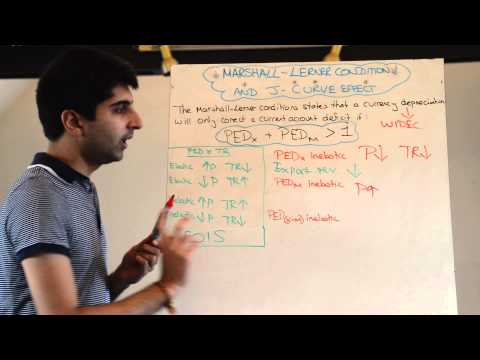 ▶ Topic lesson
A lesson on this topic · by EconplusDal. Tap the picture to open it on YouTube.
Solutions follow the official Cambridge mark schemes; marks are shown in grey. Videos are from other YouTube channels. Paper codes read component / series / year: M/J = May/June, O/N = October/November. Past-paper questions © UCLES, reproduced for classroom practice.