Q14 · 0455/23/O/N/22 Q5
Worked solution from the International trade and globalisation Theory (Paper 2) booklet, Part 2 of 4.

Worked solution
(a)
Write any two components of the current account:
Trade in goods (visible trade, exports and imports of goods). [1]
Trade in services (invisible trade). [1]
Also credited: primary income and secondary income (current transfers).
(b)
Explain two reasons, each as a reason and then its effect. Any two of these:
Differences in level of income (GDP per head) or employment, [1]
which affect the ability to buy goods and services. [1]
Or: differences in productivity, [1]
which lead to differences in the quantity of goods and services people can enjoy. [1]
Also credited: healthcare (life expectancy), education, technology, resources, environment, cost of living.
(c)
Analyse means: build chains of reasons. Write enough chains to reach 6 marks:
Tariffs raise the price of imports, [1]
so demand for imports falls and import spending falls, improving the current account. [1]
Demand for domestic firms' goods rises, so unemployment falls and growth rises. [1]
To protect infant industries, [1]
so they can grow and gain economies of scale instead of being driven out by large foreign firms. [1]
To stop dumping, [1]
where foreign goods are sold below cost to drive out domestic firms.
(d)
Discuss means: why it might, why it might not, then decide.
Why it might: households may spend more on goods and services, [1]
and the higher total demand may increase output. [1]
Firms may invest more, which raises employment and productive capacity. [1]
Why it might not: the economy may already be at full employment, [1]
so higher total demand raises prices (inflation) rather than output. [1]
Households and firms may spend on imports, or borrow to repay past debts. [1]
Conclusion: it depends on whether there are unused resources and where the money is spent; growth is likely only if spare capacity exists. [2]
Official mark scheme

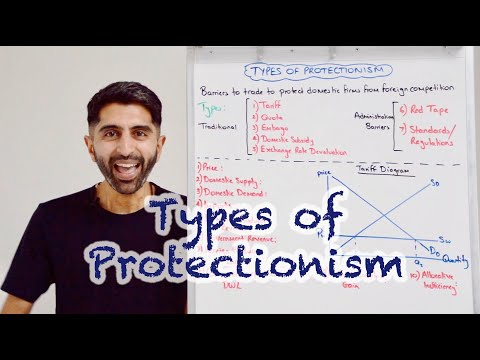 ▶ Topic lesson
A lesson on this topic · by EconplusDal. Tap the picture to open it on YouTube.
Solutions follow the official Cambridge mark schemes; marks are shown in grey. Videos are from other YouTube channels. Paper codes read component / series / year: M/J = May/June, O/N = October/November. Past-paper questions © UCLES, reproduced for classroom practice.