Q33 · 0455/22/M/J/20 Q3
Worked solution from the Government and the macroeconomy Theory (Paper 2) booklet, Part 4 of 8.

Worked solution
(a)
Write any two: medium of exchange, [1]
measure of value (unit of account), or standard of deferred payments. [1]
(b)
Any two advantages, each identified and explained.
Advantage 1: banknotes are generally acceptable, [1]
because people are prepared to accept them in exchange for products and to settle debts. [1]
Advantage 2: banknotes are portable, [1]
because they are light to carry around. [1]
(Other accepted advantages: divisible, as notes come in different denominations; recognisable; limited in supply as the central bank prints a set number; homogeneous.)
(c)
Analyse means: give each step of the chain of reasoning and link them.
Occupational mobility (changing jobs) is influenced by education: the more qualifications workers have, [1]
the more choice of jobs they have. [1]
It is also influenced by training: the more skills workers have, the easier it is to switch jobs. [1]
Geographical mobility (moving area) is influenced by housing: if housing is cheaper or more available, workers can move more easily. [1]
It is also influenced by family ties: people may not move because children are at school or a partner has a job locally. [1]
Mobility between countries is influenced by immigration controls. [1]
(d)
Discuss means: explain why it should, why it should not, then decide.
Why it should: a higher rate of interest discourages borrowing and encourages saving, so people spend less and demand-pull inflation falls.
It can reduce unsustainable debt if people and firms are borrowing too much.
It can raise the exchange rate if there is downward pressure on a fixed rate, and may reduce a current account deficit if lower spending reduces imports.
Why it should not: it may increase cyclical unemployment by reducing total demand.
It may reduce economic growth because the higher cost of borrowing discourages investment in capital goods.
It may raise the exchange rate and make exports less price competitive.
Conclusion: a rise should happen if inflation or debt is the main problem, but not if unemployment and growth are weak, so it depends on the economy's biggest problem.
This reaches Level 3: a reasoned discussion that examines both sides with clear, logical analysis, and a thoughtful, justified conclusion. [8]
Official mark scheme

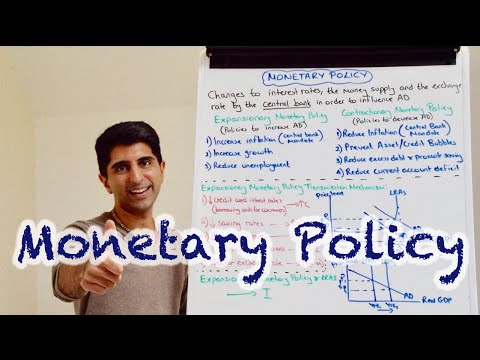 ▶ Topic lesson
A lesson on this topic · by EconplusDal. Tap the picture to open it on YouTube.
Solutions follow the official Cambridge mark schemes; marks are shown in grey. Videos are from other YouTube channels. Paper codes read component / series / year: M/J = May/June, O/N = October/November. Past-paper questions © UCLES, reproduced for classroom practice.