Q35 · 9700/42/F/M/25 Q1
Worked solution from the Energy and respiration Theory (Paper 4) booklet, Part 2 of 2.

Worked solution
(a)
Recall the energy values: carbohydrate and protein about 17 kJ g−1; lipid about 37 kJ g−1.
Tick approximately 17 for carbohydrate, approximately 37 for lipid and approximately 17 for protein. [1]
(b)(i)
Write: respirometer. [1]
(b)(ii)
Write: to absorb (remove) carbon dioxide, so any volume change is due to oxygen use. [1]
(c)(i)
Balance the oxygen atoms. Right side: 4 × 2 (in CO2) + 3 × 1 (in H2O) = 11 oxygen atoms. Left side: 5 oxygen atoms already in C4H6O5.
Oxygen atoms needed = 11 − 5 = 6, which is 3 molecules of O2.
Write: 3 [1]
(c)(ii)
RQ = CO2 produced ÷ O2 taken in = 4 ÷ 3
Write: 1.33 [1]
(d)(i)
Read Fig. 1.3: during torpor the RQ goes down from about 0.9 at the start (8:00) to 0.75 at the end (about 17:00). Write any three of these:
The RQ falls during torpor. [1]
Data quote: RQ about 0.9 at the start of torpor and 0.75 at the end (maximum 0.98). [1]
Explanation: the mouse respires more lipid (or protein) as RQ moves towards 0.7. [1]
Other accepted idea: it is running out of carbohydrate (glycogen).
(d)(ii)
Torpor saves energy, so think of times when that helps. Write any two of these:
In winter or cold weather, when food is limited, to conserve energy or reduce heat loss. [1]
In summer, hot or dry conditions, to conserve water or prevent overheating. [1]
To avoid predation. (Another factor with a reason also scores.)
Official mark scheme

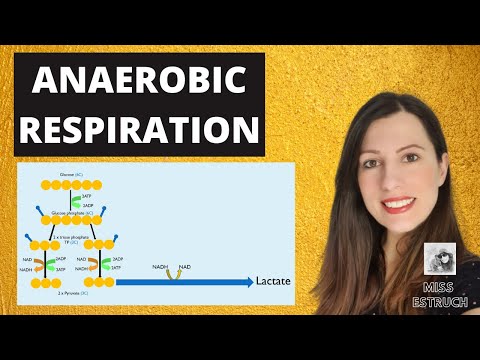 ▶ Topic lesson
A lesson on this topic · by Miss Estruch Biology. Tap the picture to open it on YouTube.
Solutions follow the official Cambridge mark schemes; marks are shown in grey. Videos are from other YouTube channels. Paper codes read component / series / year: M/J = May/June, O/N = October/November. Past-paper questions © UCLES, reproduced for classroom practice.