Q26 · 9700/41/M/J/20 Q4
Worked solution from the Genetic technology Theory (Paper 4) booklet, Part 2 of 3.

Worked solution
(a)
Complex I is part of the electron transport chain, which makes ATP.
With a faulty complex I, less or no ATP is made. [1]
So there is poor muscle contraction and reduced impulse transmission in nerves. [1]
(b)
Mitochondria come from the mother's egg and are shared out randomly. Any three of these.
Different children have different amounts of mutant mtDNA / mitochondria. [1]
Only the mother or siblings above the threshold of mutant mtDNA will show symptoms, so it does not follow typical patterns of inheritance. [1]
Mutant mtDNA is inherited maternally; males do not pass it on. [1]
(c)
Give arguments for and against; any two of each, scoring three marks in all.
For: more diagnosis, so better management; people can avoid losing further children / decide not to have children / choose to after embryo testing; an enucleated donor egg could be used. [1]
Against: unequal access to the test; no cure; some people may still lead a normal life. [1]
Against: many mutations are still unknown, so a positive diagnosis may not follow. [1]
(d)
Valine is bigger and branched, so it does not fit like glycine.
The alpha helix (secondary structure) forms differently. [1]
The folding / bonds in the tertiary structure change, so the 3D shape changes. [1]
Official mark scheme

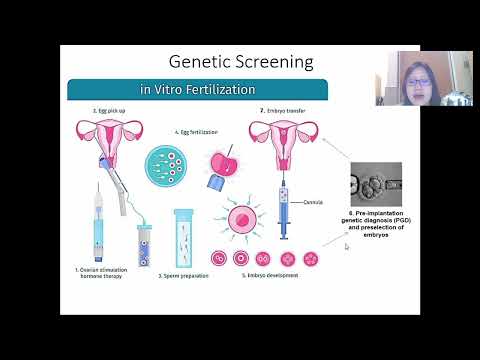 ▶ Topic lesson
A lesson on this topic · by Ms Beh @behlogy | Cambridge A Level Biology (9700). Tap the picture to open it on YouTube.
Solutions follow the official Cambridge mark schemes; marks are shown in grey. Videos are from other YouTube channels. Paper codes read component / series / year: M/J = May/June, O/N = October/November. Past-paper questions © UCLES, reproduced for classroom practice.