Q3 · 2059/11/M/J/20 Q3
Worked solution from the The Khilafat Movement Theory (Paper 1) booklet, Part 3 of 3.

Worked solution
(a)
General Dyer was a British commander [1]
After demonstrations in Amritsar in early 1919, he moved troops there to restore order following riots [1]
On 13 April he ordered his troops to confront a peaceful gathering of thousands of people in the Jallianwala Bagh (a public park) [1]
The troops opened fire and killed many people, and Dyer was later removed from command because of his cruel actions [1]
(b)
Explanation 1: Gandhi called off his support for the Khilafat Movement after the Chauri Chaura incident. This caused Muslim and Hindu groups to stop working together, so the Movement was weakened.
Explanation 2: In 1920 many Muslims set off on a hijrat to Afghanistan, but the Afghan government did not welcome them as they had expected. The migrants returned home to find their property and jobs taken by others. Getting their lives back to normal became more important than the Movement, so their interest fell.
Explanation 3: The new Turkish leader, Kemal Ataturk, exiled the Khalifa and abolished the institution of the Caliph in 1924. This ended the purpose of the Movement.
This reaches Level 3 (explanation): it gives three explanations of why the Movement ended, each with a reason or effect. [7]
(c)
Success: Bengal was the largest province in India. Of its 84 million people, 54 million were Hindu. It had become too large and complex for the British to govern, and two smaller provinces were easier and more efficient to administer.
Success: The Muslim community was pleased. After partition they were fully recognised in East Bengal, where they were the majority. The separation along religious lines ended the oppression of Muslims under Hindu rule.
Lack of success: Bengali Hindu groups objected. They believed partition was a deliberate British policy of 'divide and rule' that would weaken Hindu unity and influence in East Bengal.
Lack of success: Many Hindus protested, and their demands put pressure on the British government to reverse its decision. British goods were boycotted under the Swadeshi Movement, which ultimately succeeded. There was also an attempted assassination of Lord Minto.
Judgement: Partition was only partly successful. It made government easier and pleased the Muslim community, but it did not last because it was reversed in 1911 after sustained objections from Hindu groups. So it was more a failure than a success in the end.
This reaches Level 5: it explains both the success and the lack of success of the Partition and ends with a supported judgement. [14]
Official mark scheme

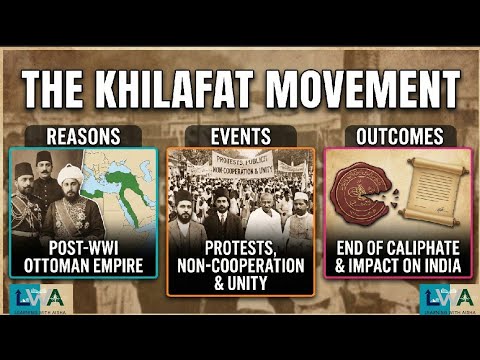 ▶ Topic lesson
A lesson on this topic · by Learning with Aisha. Tap the picture to open it on YouTube.
Solutions follow the official Cambridge mark schemes; marks are shown in grey. Videos are from other YouTube channels. Paper codes read component / series / year: M/J = May/June, O/N = October/November. Past-paper questions © UCLES, reproduced for classroom practice.