Q2 · 5090/21/M/J/20 Q9
Worked solution from the Coordination and control Theory (Paper 2) booklet, Part 1 of 6.

Worked solution
(a)
Compare the jobs of the two neurones. Five of these points score.
Similarity: both carry impulses. [1]
Difference: a motor neurone carries impulses from the CNS (brain or spinal cord). [1]
A motor neurone carries them to an effector (a muscle or gland). [1]
Difference: a sensory neurone carries impulses from a receptor. [1]
A sensory neurone carries them to the CNS (spinal cord or brain). [1]
Other similarities that also score: both work quickly, over long distances, and in voluntary and involuntary (reflex) actions.
(b)(i)
The cerebrum is the largest part of the brain. Three of these functions score.
Reasoning, planning, problem solving, memory or emotions. [1]
Speech, hearing or sight. [1]
Movement (voluntary actions) or recognition. [1]
(b)(ii)
The hypothalamus is involved in homeostasis (maintaining a constant internal environment). [1]
It controls secretions of the pituitary gland, so it links the nervous system to hormones. [1]
Official mark scheme

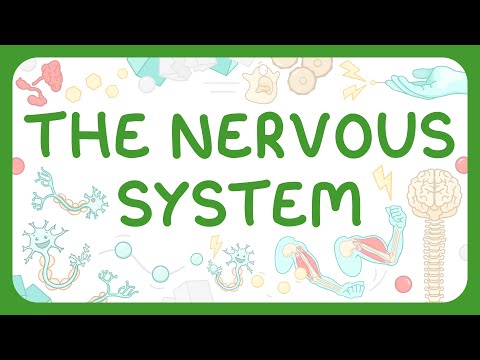 ▶ Topic lesson
A lesson on this topic · by Cognito. Tap the picture to open it on YouTube.
Solutions follow the official Cambridge mark schemes; marks are shown in grey. Videos are from other YouTube channels. Paper codes read component / series / year: M/J = May/June, O/N = October/November. Past-paper questions © UCLES, reproduced for classroom practice.