Q23 · 9700/43/M/J/25 Q5
Worked solution from the Genetic technology Theory (Paper 4) booklet, Part 1 of 3.

Worked solution
(a)
Compare the two types of DNA. Write any three points.
cDNA has no introns (only exons); genomic DNA has introns and exons. [1]
Introns are non-coding; exons are coding. Bacteria cannot remove introns (cannot splice). [1]
With cDNA, functional mRNA is made and translation occurs; with genomic DNA, functional mRNA is not made and translation does not occur. [1]
(b)(i)
Write: DNA ligase makes the sticky ends bond together (anneal) by hydrogen bonds between complementary bases. [1]
It also forms phosphodiester bonds, joining the sugar-phosphate backbone. [1]
(b)(ii)
A promoter is the start signal for transcription.
It is needed so RNA polymerase can bind. [1]
So transcription (gene expression) occurs. [1]
(c)
Write any three of these.
The marker gene is added to the plasmid, next to the insulin gene and downstream of a promoter. [1]
When the marker gene is expressed, fluorescent protein is made, which glows under UV or blue light. [1]
This shows which bacteria (cells) are transformed, that is, took up the plasmid. [1]
(d)
Write any two advantages of yeast.
Yeast cells are easier / cheaper to culture, or more productive. [1]
Insulin is easier to extract / purify, or yeast cells are similar to β-cells (they have a Golgi apparatus). [1]
Official mark scheme

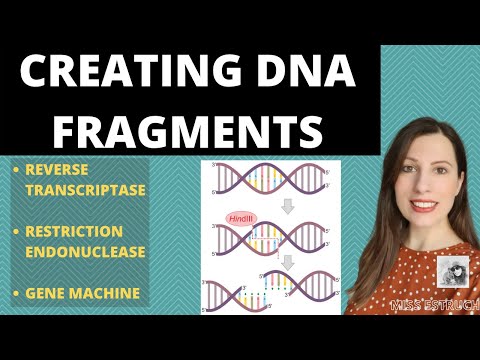 ▶ Topic lesson
A lesson on this topic · by Miss Estruch Biology. Tap the picture to open it on YouTube.
Solutions follow the official Cambridge mark schemes; marks are shown in grey. Videos are from other YouTube channels. Paper codes read component / series / year: M/J = May/June, O/N = October/November. Past-paper questions © UCLES, reproduced for classroom practice.