Q28 · 9700/43/M/J/20 Q4
Worked solution from the Genetic technology Theory (Paper 4) booklet, Part 2 of 3.

Worked solution
(a)
Without CFTR, chloride ions stay inside the cell. [1]
So there is no water potential difference, and no osmosis of water out of the cell into the mucus, so it stays thick. [1]
(b)
Any three advantages.
If the test is negative: it reduces worry during the pregnancy. [1]
If positive: early treatment / management of CF symptoms. [1]
The parents have the option of a termination. [1]
Also accepted: it reduces the frequency of the CF allele in the population, and a non-CF child will not have to go through the same procedure when having children.
(c)
Data: standard screening gives 32% pregnancies and double screening gives 49%, a rise of 17 percentage points. Any three points.
It increases the chance of a successful pregnancy. [1]
A single biopsy is less dangerous / damaging to the embryo than two. [1]
It is cheaper, as the pregnancy rate is higher, and a therapeutic abortion is not needed. (any one of these) [1]
Ethical objection: choosing / pre-selecting embryos may go against some beliefs. Also accepted if this is used in place of one point above.
Official mark scheme

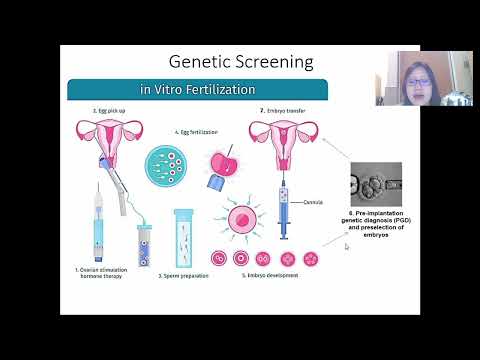 ▶ Topic lesson
A lesson on this topic · by Ms Beh @behlogy | Cambridge A Level Biology (9700). Tap the picture to open it on YouTube.
Solutions follow the official Cambridge mark schemes; marks are shown in grey. Videos are from other YouTube channels. Paper codes read component / series / year: M/J = May/June, O/N = October/November. Past-paper questions © UCLES, reproduced for classroom practice.