Q52 · 9708/41/O/N/22 Q3
Worked solution from the The price system and the microeconomy Theory (Paper 4) booklet, Part 6 of 8.

Worked solution
(a)
Discuss means: explain why the statement might be true, why it might not, then judge how far you agree.
A monopoly is a firm that controls all (or a large share, for example at least 25%) of the market supply.
Profit maximisation is generally a key aim of a monopoly. It produces the output where marginal cost (MC) = marginal revenue (MR) and charges the price on the demand curve at that output.
Limit pricing means setting a lower price to deter new firms from entering the market. A monopoly can do this because it keeps its average total costs lower than rivals' costs, through economies of scale and dynamic efficiency.
In the short run, limit pricing means the monopoly does not produce where MC = MR, so it does not make the maximum profit. But the main aim is to protect or increase market share in the long run by preventing entry. Once entry is blocked, maximum profit can be earned in the long run. So it is possible to partly support the statement.
Why the statement might not hold: limit pricing only supports profit maximisation in the long run, not always. Limit pricing is not the only way, since barriers to entry such as economies of scale can also protect profits.
Also, some monopolies do not aim for maximum profit even in the long run. Principal-agent theory says managers may prefer other goals such as sales maximisation, revenue maximisation or growth of market share, so the statement would not always apply.
Conclusion: I agree only in part. Monopolies often aim to maximise profit, and limit pricing can protect it in the long run, but limit pricing costs profit in the short run and is not the only way, and some monopolies pursue other aims.
This reaches Level 4: it clearly explains monopoly profit-maximising pricing, analyses why limit pricing could be used and the extent to which it supports the statement, and gives evaluative comment on how far the statement can be supported. [12]
(b)
Explain collusion first, then consider whether it happens only in one type of market, and reach a conclusion.
Collusion is when firms find it in their interest to co-operate with rivals to maximise profits. Usually they agree to fix output or price (or both). A formal agreement is a cartel, which is usually illegal.
Tacit (informal) collusion is where there is no formal agreement; for example a dominant firm sets the price or output and the others follow.
Conditions that favour collusion: firms produce similar products with similar methods; firms are large, often with a dominant firm; there are significant barriers to entry; the market is stable; and government does not interfere.
Perfect competition: firms are price takers and there are no barriers to entry, so collusion is not possible. Monopolistic competition: firms are very small, sell differentiated products and there are no barriers to entry, so collusion is unlikely. Monopoly: the firm is large but has no competitors because it controls the whole market, so collusion is not relevant.
Oligopoly: a few large firms, often producing similar goods, with barriers to entry. These conditions give the best chance for collusion. So it is reasonable to agree that collusion happens mainly in oligopoly.
Evaluation: collusion does not automatically happen in an oligopoly; firms may still compete through advertising and product differentiation; and many cartels break down because of cheating by members who do not stick to the agreement.
Conclusion: the view is largely correct, since only oligopoly fits the conditions for collusion, but oligopoly firms do not always collude, so it is the market structure that makes collusion possible, not certain.
This reaches Level 4: it clearly explains collusion, identifies the characteristics needed for successful collusion, discusses each market structure in relation to collusion, and reaches a conclusion that addresses the question. [13]
Official mark scheme

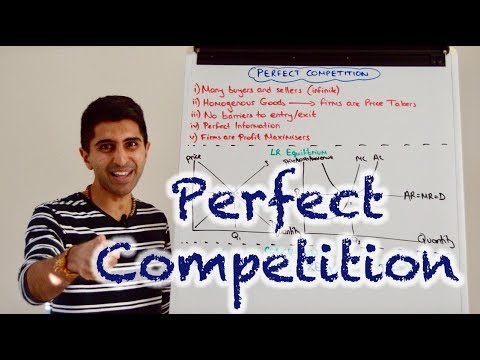 ▶ Topic lesson
A lesson on this topic · by EconplusDal. Tap the picture to open it on YouTube.
Solutions follow the official Cambridge mark schemes; marks are shown in grey. Videos are from other YouTube channels. Paper codes read component / series / year: M/J = May/June, O/N = October/November. Past-paper questions © UCLES, reproduced for classroom practice.