Q5 · 9700/43/M/J/20 Q3
Worked solution from the Genetic technology Theory (Paper 4) booklet, Part 1 of 3.

Worked solution
(a)(i)
Give pre-zygotic points (before fertilisation) and post-zygotic points (after). Any four score.
Pre-zygotic: females choose mates by plumage (sexual selection). [1]
Pre-zygotic: females choose mates by song. [1]
Post-zygotic: hybrid males have no normal sperm (0%) and all female hybrids are sterile. [1]
Post-zygotic: selection against hybrids because of reproductive failure, shown by data: only 38.0% of hybrid clutches hatched against 94.5% and 89.3% for pure species, and 100% of nestlings in hybrid nests were fathered by another male. [1]
(a)(ii)
This is allopatric speciation. Any five points score.
The ancestral population was split by geographical isolation. [1]
There was no gene flow / interbreeding between the populations. [1]
They had different selection pressures / environmental conditions. [1]
Different mutations occurred in each. Some mutations made individuals better adapted. [1]
Those individuals survived and reproduced, and passed on the advantageous alleles, over many generations. [1]
In the end there was reproductive isolation, so two species. (This is allopatric speciation.)
(b)(i)
Specific primer: it binds to the target region so only that region is amplified. [1]
Restriction enzyme: it cuts DNA at a specific recognition site, giving fragments of different lengths. [1]
Gel electrophoresis: it separates the fragments by length. [1]
(b)(ii)
Read the gel: species A has one fragment (one band) and species B has two fragments (two bands). [1]
Explanation: in A the enzyme did not cut because there is no restriction site in the target region, or the two species do not have the same SNP. [1]
Official mark scheme

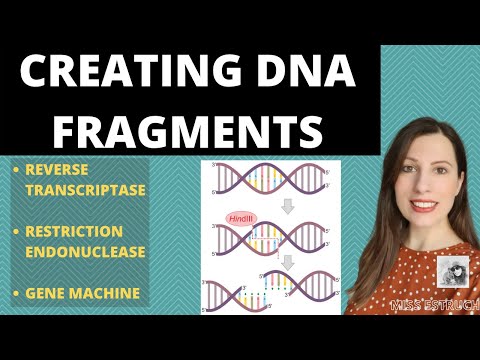 ▶ Topic lesson
A lesson on this topic · by Miss Estruch Biology. Tap the picture to open it on YouTube.
Solutions follow the official Cambridge mark schemes; marks are shown in grey. Videos are from other YouTube channels. Paper codes read component / series / year: M/J = May/June, O/N = October/November. Past-paper questions © UCLES, reproduced for classroom practice.