Q19 · 0455/21/M/J/24 Q4
Worked solution from the International trade and globalisation Theory (Paper 2) booklet, Part 2 of 4.

Worked solution
(a)
Write: the tertiary sector is the sector that provides services. [1]
Give one example that is not healthcare, such as banking (or education, or a coffee shop). [1]
(b)
Explain both benefits and show how they differ.
A private benefit is a benefit enjoyed by the person consuming (or the firm providing) the product. [1]
For example, a patient enjoys better health and a longer life, or a hospital earns revenue and profit. [1]
An external benefit is a benefit enjoyed by a third party not directly involved in consuming or producing the product. [1]
For example, if people are vaccinated, others have a lower risk of catching the virus. [1]
(c)
Analyse means: give a chain of reasoning.
A horizontal merger is a merger between two firms in the same industry and at the same stage of production. [1]
A government may prevent it if the new firm would gain monopoly power, [1]
with less competition, which can lead to higher prices, [1]
and lower quality (and less choice or innovation for consumers). [1]
The new firm may also cut many jobs (rationalisation), leading to a substantial loss of jobs. [1]
Or the firm may become too large, suffer diseconomies of scale and become less internationally competitive, so exports fall. [1]
(d)
Discuss means: give reasons why it might, reasons why it might not, then decide.
Why it might continue: the MNC may earn high revenue and profit because demand is high, [1]
it may have low costs because wages and raw materials are cheap in the host country, [1]
it may have high-quality labour from good education and training, or be subsidised by the host government, so it stays. [1]
Why it might not: the natural resources it extracts may run out, [1]
tax in the host country may rise, or a rise in the exchange rate may make its exports dearer, [1]
strikes by trade unions, or changes in regulations, may make production harder, [1]
and more profitable opportunities may appear in other countries, so it moves. [1]
Conclude: it depends on whether profits stay high and costs stay low compared with other countries; an MNC stays only while the host country is the best place to produce. [1]
Official mark scheme

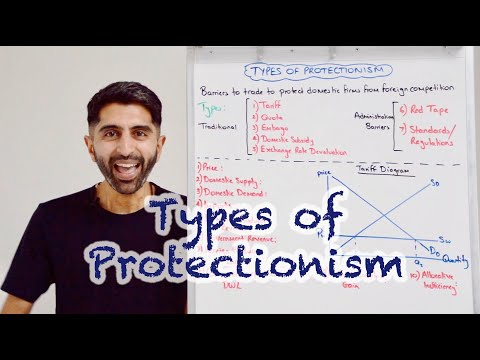 ▶ Topic lesson
A lesson on this topic · by EconplusDal. Tap the picture to open it on YouTube.
Solutions follow the official Cambridge mark schemes; marks are shown in grey. Videos are from other YouTube channels. Paper codes read component / series / year: M/J = May/June, O/N = October/November. Past-paper questions © UCLES, reproduced for classroom practice.