Q29 · 9700/21/O/N/21 Q3
Worked solution from the Infectious diseases Theory (Paper 2) booklet, Part 2 of 2.

Worked solution
(a)
Cholera spreads by the faecal-oral route. Write two steps.
The infected person's faeces (sewage) contaminate drinking water, food or crops. [1]
The uninfected person drinks the contaminated water or eats food washed in it. [1]
(b)
T is a coiled part of the protein ribbon. Any three of these:
It shows secondary structure. [1]
It is an alpha helix. [1]
It is held by hydrogen bonds, between the NH of one amino acid and the CO of another amino acid four places ahead (the hydrogen of NH and the oxygen of CO). [1]
(c)(i)
Lysosomes hold digestive enzymes. Any two of these:
They fuse with the phagosome (phagocytic vacuole). [1]
They contain hydrolytic (digestive) enzymes that break down the pathogen or foreign material. [1]
(c)(ii)
Think about the immune response and safety. Any two of these:
The cells are dead, so they cannot cause disease or reproduce; and only part of choleragen is used, so there is no toxic effect. [1]
The vaccine has different antigens, so more than one type of B-lymphocyte is selected, giving different antibodies and more than one type of memory cell, so the immune system can respond to both the bacterial cells and the toxin. [1]
(d)
Consequences for people and for other bacteria. Any four of these:
The resistant V. cholerae is not killed by the antibiotic and can still reproduce. [1]
We are unable to treat people with cholera, so illness is prolonged. [1]
There is an increased risk of spread and increased death rate from cholera. [1]
Resistance alleles can be transferred to other species or strains of bacteria, giving multiple resistance, so other bacterial diseases cannot be treated and the death rate from them rises; there is a need to research alternative antibiotics. [1]
Official mark scheme

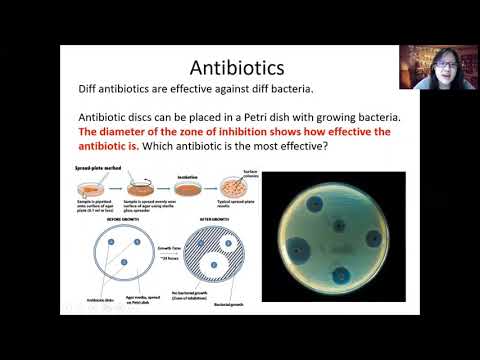 ▶ Topic lesson
A lesson on this topic · by Ms Beh @behlogy | Cambridge A Level Biology (9700). Tap the picture to open it on YouTube.
Solutions follow the official Cambridge mark schemes; marks are shown in grey. Videos are from other YouTube channels. Paper codes read component / series / year: M/J = May/June, O/N = October/November. Past-paper questions © UCLES, reproduced for classroom practice.