Q9 · 9700/42/F/M/21 Q8
Worked solution from the Energy and respiration Theory (Paper 4) booklet, Part 2 of 2.

Worked solution
(a)(i)
The Krebs cycle takes place in the matrix, the fluid-filled middle of the mitochondrion.
Draw a label line from the letter A to the mitochondrial matrix. [1]
(a)(ii)
B points to a fold of the inner membrane.
Write: crista (cristae). [1]
(a)(iii)
Write any five of these:
The inner membrane is folded into many cristae. [1]
This gives a large surface area. [1]
It holds electron carriers (the electron transport chain, cytochromes). [1]
It holds ATP synthase, which makes ATP. [1]
It is impermeable to protons, so a proton gradient forms (high proton concentration in the intermembrane space). [1]
Another point that scores: proton pumps.
(b)
Succinate loses electrons, so use an indicator that accepts electrons.
Write: DCPIP (or methylene blue). [1]
It changes colour (blue to colourless) when it is reduced, by accepting electrons from succinate. [1]
(c)(i)
Read Fig. 8.4. Approximate values at high succinate: muscle 37 °C about 210, liver 37 °C about 105, muscle 10 °C about 30, liver 10 °C about 12 arbitrary units. Write any three of these:
The rate increases as succinate concentration increases up to 1.0 mmol dm–3, then stays level (maximum rate). [1]
The rate is higher at 37 °C than at 10 °C in both liver and muscle. [1]
The rate is higher in muscle than in liver at both temperatures, for example about 210 units against about 105 units at 37 °C. [1]
(c)(ii)
Write any three of these:
Respiration produces ATP. [1]
Muscle needs more ATP (energy) than liver. [1]
This is for muscle contraction: muscle is more metabolically active. [1]
Another point that scores: shivering to keep body temperature up.
(c)(iii)
Write: muscle is contracted (shivers), generating heat, so it is more metabolically active than liver. [1]
Official mark scheme

 ▶ Topic lesson
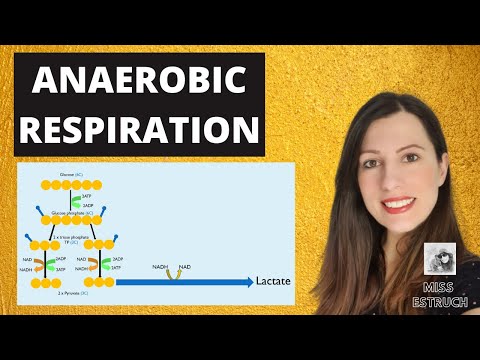
A lesson on this topic · by Miss Estruch Biology. Tap the picture to open it on YouTube.
Solutions follow the official Cambridge mark schemes; marks are shown in grey. Videos are from other YouTube channels. Paper codes read component / series / year: M/J = May/June, O/N = October/November. Past-paper questions © UCLES, reproduced for classroom practice.