Q21 · 9708/42/F/M/21 Q6
Worked solution from the Government macroeconomic intervention Theory (Paper 4) booklet, Part 3 of 3.

Worked solution
Essay
The question has two tasks: explain why equilibrium can be below full employment, then critically evaluate policies to reach full employment. A reasoned conclusion must cover both parts.
Equilibrium is where planned injections equal planned withdrawals (or where aggregate demand equals aggregate supply), so national income has no tendency to change. Use the circular flow of income: withdrawals (saving, taxes, imports) leave the flow and injections (investment, government spending, exports) enter it. Equilibrium is reached when injections = withdrawals, and this can happen at an output level below full employment, if aggregate demand is too low to buy all the output the economy could produce.
Keynesian view: equilibrium below full employment exists because aggregate demand is too low and wages and prices do not fall quickly enough to restore full employment. There is a deflationary (recessionary) gap.
Monetarist view: there is a natural rate of unemployment (equilibrium unemployment) caused by frictions in the market, giving structural and frictional unemployment. The economy is in equilibrium at this level.
Policy approach 1, Keynesian demand side: raise injections by government spending and a budget deficit. With the multiplier, income rises by more than the initial injection, moving output to full employment.
Evaluation: a budget deficit may cause inflation (demand-pull), crowding out of private spending, and worsen the balance of payments as imports rise.
Policy approach 2, supply side: tackle frictions with information, skills and training to raise occupational mobility, and use taxes and subsidies to encourage hiring and working.
Evaluation: subsidies have a significant opportunity cost, and training and education take a long time to work.
Conclusion: the right policy depends on the cause of the shortfall. If it is a lack of demand, Keynesian policy is better; if the cause is frictions and low mobility, supply-side policy is better, because demand policy would only cause inflation. A mix may be best.
This reaches Level 4: it explains the meaning of equilibrium, fully develops the analysis of its approach, gives at least two evaluative comments, and reaches a reasoned conclusion that relates to both parts of the question (so the 21-mark cap does not apply). [25]
Official mark scheme

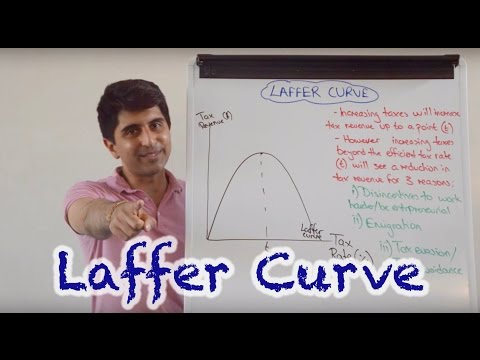 ▶ Topic lesson
A lesson on this topic · by EconplusDal. Tap the picture to open it on YouTube.
Solutions follow the official Cambridge mark schemes; marks are shown in grey. Videos are from other YouTube channels. Paper codes read component / series / year: M/J = May/June, O/N = October/November. Past-paper questions © UCLES, reproduced for classroom practice.