Q27 · 9708/23/O/N/21 Q4
Worked solution from the Government macroeconomic intervention Theory (Paper 2) booklet, Part 3 of 4.

Worked solution
(a)
Write: inflation is a sustained increase in the general price level. [1]
It is normally measured by the consumer prices index (CPI), as the annual percentage change in the index (or an equivalent index). [1]
Consumers: people on fixed incomes lose purchasing power as prices rise faster than their income. [1]
The real value of savings is eroded, so savers can buy less. [1]
(Other creditable point: shoe leather costs, because consumers spend time and effort searching for the best price.) [1]
Producers: menu costs (the cost of changing prices). [1]
It is difficult to make long-term decisions, such as investment, because costs and prices are uncertain, and business confidence falls. [1]
Export competitiveness falls if domestic prices rise faster than those abroad, so firms may lose sales. [1]
(b)
Discuss means: analyse the policy, analyse alternatives, then judge which is best.
Increasing interest rates: advantage: it makes borrowing dearer, so consumption and investment fall, which reduces aggregate demand and demand-pull inflation. [1]
Advantage: it also makes saving more attractive, so households spend less and price rises ease. [1]
Disadvantage: the effect depends on the rate of inflation and takes time (a time lag) to work. [1]
Disadvantage: investment and growth fall, and it does not tackle cost-push inflation. [1]
Fiscal policy: raising taxes or cutting government spending reduces aggregate demand directly and so eases demand-pull inflation. [1]
But changes in taxes and government spending take time to plan and may be hard to reverse. [1]
Supply-side policies (for example improving skills) increase aggregate supply and lower costs in the long run. [1]
But they are slow to work, so they do not reduce a rapid rise in inflation in the short run. [1]
Evaluation: which policy is best depends on the cause of inflation (demand-pull or cost-push), its extent and the time available. [1]
Interest rates act on demand and can be changed by the central bank, but supply-side policy tackles the cause over the long run. [1]
A combination of policies is likely to work better than any one alone. [1]
Conclusion: raising interest rates is not always the best way; it is best for demand-pull inflation, but fiscal and supply-side policies may be needed as well. [1]
Official mark scheme

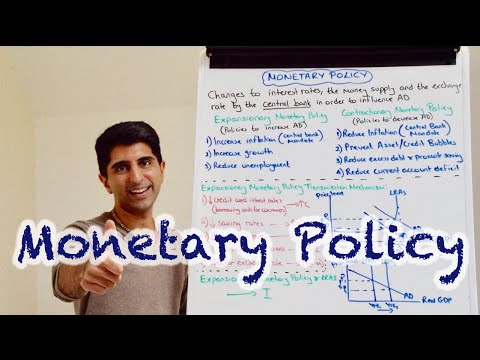 ▶ Topic lesson
A lesson on this topic · by EconplusDal. Tap the picture to open it on YouTube.
Solutions follow the official Cambridge mark schemes; marks are shown in grey. Videos are from other YouTube channels. Paper codes read component / series / year: M/J = May/June, O/N = October/November. Past-paper questions © UCLES, reproduced for classroom practice.