Q92 · 9708/13/O/N/20 Q27
Worked solution from the Government macroeconomic intervention MCQ booklet.

Worked solution
The question asks what is likely to happen when a central bank uses expansionary monetary policy to fight deflation.
Expansionary monetary policy means a larger money supply and lower interest rates. This makes borrowing cheaper, so consumption and investment rise and aggregate demand increases.
Higher demand pushes up the price level, so the rate of inflation rises (which is what the policy is trying to achieve after deflation).
So the answer is B.
A is wrong because lower interest rates mean a lower cost of borrowing. C is wrong because lower interest rates tend to make the exchange rate depreciate. D is wrong because government debt depends on government spending and taxes, which this policy does not change directly.
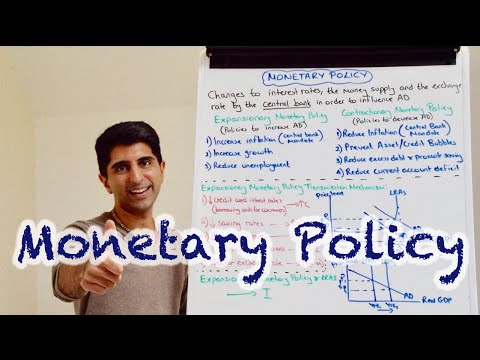 ▶ Topic lesson
A lesson on this topic · by EconplusDal. Tap the picture to open it on YouTube.
Solutions follow the official Cambridge mark schemes. Videos are from other YouTube channels. Paper codes read component / series / year: M/J = May/June, O/N = October/November. Past-paper questions © UCLES, reproduced for classroom practice.