Q11 · 9700/42/O/N/20 Q2
Worked solution from the Selection and evolution Theory (Paper 4) booklet, Part 2 of 3.

Worked solution
(a)
The best Northern European yield is Saanen in Northern Europe, 5.17 kg; the native yield is 0.25 kg.
Increase = 5.17 − 0.25 = 4.92 kg [1]
Times greater = 4.92 ÷ 0.25 = 19.68 = 20 (2 significant figures). [1]
(Error carried forward: 5.17 ÷ 0.25 = 20.68 = 21 is credited for the second mark.)
(b)(i)
Compare different breeds in the same place, so the environment is the same. Any two of the points below.
Write: different breeds in the same location have different milk yields. [1]
Quote comparative data with units, e.g. in Northern Europe British Alpine gives 4.09 kg but Saanen gives 5.17 kg. [1]
(Also credited as one of the two marks: different gene pools / different alleles, due to selective breeding.)
(b)(ii)
Now compare the same breed in different places, so the genes are the same. Any two of the points below.
Write: the same breed has different milk yields in different locations. [1]
Quote comparative data with units, e.g. Saanen gives 5.17 kg in Northern Europe but 1.73 kg in Barbados. [1]
(Also credited as one of the two marks: how climate, vegetation or veterinary care affects milk yield.)
(c)
Describe artificial selection step by step; any five points.
Humans apply selection pressure (artificial selection). [1]
Breed Saanen goats with local South African goats. [1]
Select offspring with high milk yield and adaptation to local conditions. [1]
Breed these selected offspring together. [1]
Repeat for many generations. [1]
(Other credited points: progeny testing of daughters of males, avoid inbreeding by out-crossing, directional selection.)
(d)
Give one social advantage and one social disadvantage.
Advantage (any one): reduces diarrhoea in children or improves their nutrition, growth and development. [1]
Disadvantage (any one): safety risks unknown / possible allergen or side effects; also credited: may disrupt good gut bacteria, expensive, or people not willing to drink GM milk. [1]
Official mark scheme

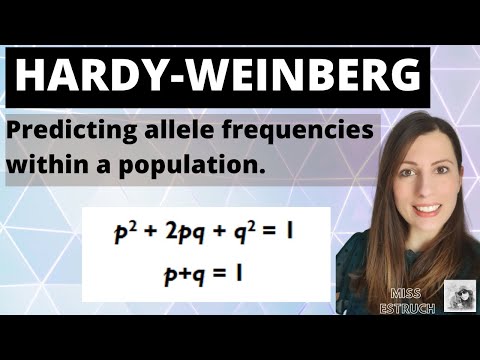 ▶ Topic lesson
A lesson on this topic · by Miss Estruch Biology. Tap the picture to open it on YouTube.
Solutions follow the official Cambridge mark schemes; marks are shown in grey. Videos are from other YouTube channels. Paper codes read component / series / year: M/J = May/June, O/N = October/November. Past-paper questions © UCLES, reproduced for classroom practice.