Q39 · 0455/12/M/J/21 Q18
Worked solution from the Government and the macroeconomy MCQ booklet.

Worked solution
The question asks which pair of tax and benefit changes would raise employment and reduce income inequality.
A progressive income tax takes a higher percentage from higher incomes, so low earners keep more when the lowest tax rate falls. Benefits for the poor help low-income households directly.
Lower the lowest tax rate: low earners keep more of their pay, so they spend more and work is more worthwhile, which helps employment.
Increase benefits for the poor: this gives more income to those with least, which reduces inequality.
Changes at the lowest rate and in benefits help people with low incomes most.
So the answer is C.
A cuts benefits for the poor and helps the rich most, so inequality rises. B raises the top rate, which cuts inequality, but cutting benefits makes the poor worse off. D raises the lowest tax rate, which hurts low earners and lowers their spending.
 ▶ Whole paper
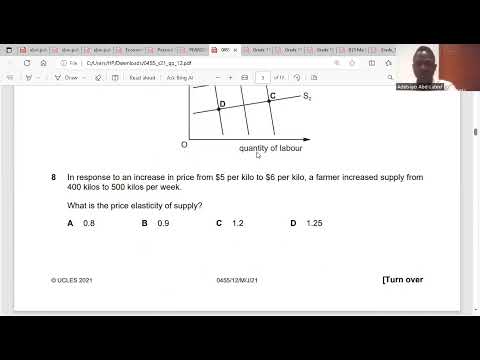
Video solution of the whole paper · by Adebayo Business 👨💼 Tutor (ABT). Tap the picture to open it on YouTube.
Solutions follow the official Cambridge mark schemes. Videos are from other YouTube channels. Paper codes read component / series / year: M/J = May/June, O/N = October/November. Past-paper questions © UCLES, reproduced for classroom practice.