Q21 · 9700/42/F/M/25 Q3
Worked solution from the Genetic technology Theory (Paper 4) booklet, Part 1 of 3.

Worked solution
(a)(i)
Taq polymerase is a DNA polymerase used in the extension stage. Any four of these:
It synthesises a new complementary DNA strand. [1]
It binds to the primers on the target DNA and adds nucleotides to the end of the primers (extension stage). [1]
Its optimum temperature is about 72 °C (70–75 °C). [1]
It is thermostable / does not denature at 95 °C, so it can be used for many PCR cycles without being replaced. [1]
(a)(ii)
The mutant allele gives the shorter product, which travels further. Child 1 has one band high up (normal only). Children 2 and 3 each have a low band (mutant).
Write: children 2 and 3. [1]
(a)(iii)
Any four of these:
Gel electrophoresis separates DNA fragments by size (length). [1]
DNA fragments are negatively charged, so they move towards the anode (positive end). [1]
Smaller fragments move faster and further through the gel. [1]
The normal gene gives a longer fragment that travels a shorter distance; the mutant gives a shorter fragment that travels further. This gives the bands in the pattern shown. [1]
(b)
Write: by horizontal transmission, e.g. conjugation (or transformation / transduction), transferring the plasmid. [1]
Official mark scheme

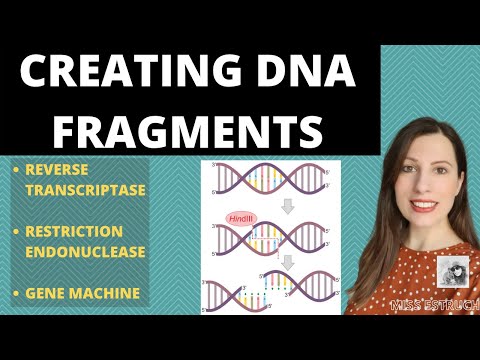 ▶ Topic lesson
A lesson on this topic · by Miss Estruch Biology. Tap the picture to open it on YouTube.
Solutions follow the official Cambridge mark schemes; marks are shown in grey. Videos are from other YouTube channels. Paper codes read component / series / year: M/J = May/June, O/N = October/November. Past-paper questions © UCLES, reproduced for classroom practice.