Q2 · 9609/32/M/J/20 Q3
Worked solution from the Human resource management Theory (Paper 3) booklet, Part 1 of 4.

Worked solution
(a)
Start with the meaning. An organisational structure shows the lines of authority and chain of command. Decentralised means decision-making power is passed down to managers lower in the structure. It usually gives a flatter structure, wider spans of control and helps develop junior managers.
HBG (application). Eusebio wants to remove three layers of middle management, give managers of buildings and gardens greater authority over local marketing and operations, make each building a profit centre and encourage two-way communication. The board keeps national marketing, new purchases, IT and strategy. Before, local managers were frustrated at slow replies to ideas, and membership had fallen by 10% since 2015.
Benefits. A more motivated workforce is likely to be more productive. Decisions can be made quickly in response to local conditions, for example Oldbury Castle's manager, whose profit centre saw visitors rise 10%.
Drawbacks. A centralised structure with fixed rules can mean fast decisions with less discussion. Decentralising can give less consistent policies, which may confuse customers about the HBG brand. Senior managers at headquarters are experienced and may decide better. Removing layers adds redundancy cost, increases the workload of remaining employees (which may cause demotivation and higher labour turnover), and managers need training for the extra responsibility. Managers might also take decisions that are not best for the whole of HBG.
Evaluation. The result depends on whether the two-month consultation won employee support, and on effective communication to avoid industrial relations problems. Redundancies also conflict with HBG's new focus on social responsibility. Judgement: decentralising will probably benefit HBG, because the old structure was slow and bureaucratic and local managers know their markets, but only if training is given, central control of brand and strategy is kept and staff are consulted.
This earns the top level for knowledge: it explains structure and decentralisation. [2]
It earns the top level for application: it uses the removal of three layers, profit centres, the consultation and Oldbury Castle. [2]
It reaches the top level for analysis: good use of theory to explain benefits and drawbacks of decentralising. [6]
It reaches the top level for evaluation: good judgement on what the benefit depends on, ending in a justified conclusion. [6]
Official mark scheme

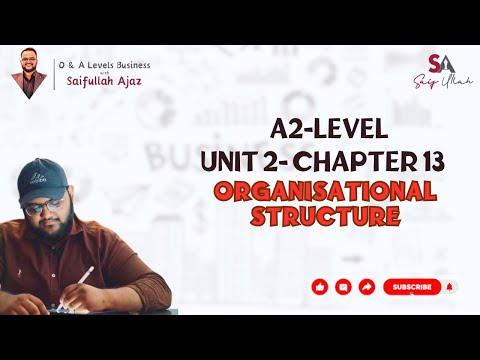 ▶ Topic lesson
A lesson on this topic · by Saifullah Ajaz . Tap the picture to open it on YouTube.
Solutions follow the official Cambridge mark schemes; marks are shown in grey. Videos are from other YouTube channels. Paper codes read component / series / year: M/J = May/June, O/N = October/November. Past-paper questions © UCLES, reproduced for classroom practice.