Q45 · 9708/41/M/J/21 Q4
Worked solution from the The price system and the microeconomy Theory (Paper 4) booklet, Part 6 of 8.

Worked solution
(a)
The question asks which costs a profit-maximising firm should look at when it sets price and output. Plan: (1) types of cost, (2) the profit-maximising rule, (3) long run and short run.
Different types of cost: total cost, average total cost (ATC), average variable cost (AVC), average fixed cost (AFC) and marginal cost (MC). Marginal cost is the extra cost of producing one more unit.
The profit-maximising position: the firm should compare marginal cost with marginal revenue. If MR is greater than MC, producing one more unit adds more to revenue than to cost, so output should rise. If MC is greater than MR, output should fall. Profit is maximised where MC = MR (with MC cutting MR from below). The firm then reads the price from the demand (average revenue) curve at that output.
Diagram: draw cost and revenue (price) up and quantity along. Draw U-shaped ATC and AVC curves, and a U-shaped MC curve that cuts both ATC and AVC at their lowest points. Draw a downward-sloping AR (demand) curve and a steeper MR curve. Mark output Q where MC = MR and the price P read up to the AR curve. Profit is the area between P and ATC at Q.
In the long run all costs are variable, so the firm must cover average total cost (ATC). Price at least equal to ATC gives normal profit; if price is below ATC, the firm makes a loss and should leave the industry.
In the short run fixed costs have to be paid whatever the output, so they are sunk and ignored. The firm must cover average variable cost (AVC). If price is above AVC (but below ATC), it should keep producing because it still makes a contribution to fixed costs. If price is below AVC, it should shut down.
This reaches Level 4: a consideration of the profit-maximising position and the role of ATC in the long run and AVC in the short run. [12]
(b)
Do you agree means: explain, then weigh both sides and decide. The statement has two parts, always possible and never desirable.
Price discrimination is charging different prices for the same good or service to different groups of consumers, for reasons that are not due to differences in cost.
It is possible only when certain conditions are met. First, the firm must be able to separate the markets so that goods cannot be resold from the cheap market to the dear one (for example by time, place or age). Second, the markets must have different price elasticities of demand. If they do not, the firm cannot gain by charging different prices. So it is not always possible.
Why it is profitable: the firm charges a higher price in the market with price-inelastic demand and a lower price in the market with price-elastic demand. Total revenue and profit rise compared with one price for all.
Diagram: draw two side-by-side graphs, market A (inelastic demand, steep D and MR) and market B (elastic demand, flatter D and MR), with the same MC curve. In each, mark output where MC = MR; the price read from D is higher in A (P_A) than in B (P_B).
Is it never desirable? Against: consumers in the inelastic market pay a higher price and there is less consumer surplus, so it may seem unfair.
For: there may be benefits. The extra revenue may allow the firm to continue operating and avoid shutting down when a single price would not cover its costs, and some consumers (such as those in the elastic market, with lower prices) can buy the good who otherwise could not. Output may also be higher than with a single price.
Conclusion: I do not agree. Price discrimination is not always possible, because it needs separate markets and different elasticities of demand, and it is not never desirable, because it can help a firm survive and let more people buy. Its effect depends on the case.
This reaches Level 4: a clear analysis of the possibility and profitability of price discrimination (separate markets, different price elasticities of demand) and of its potential benefits, with a conclusion. [13]
Official mark scheme

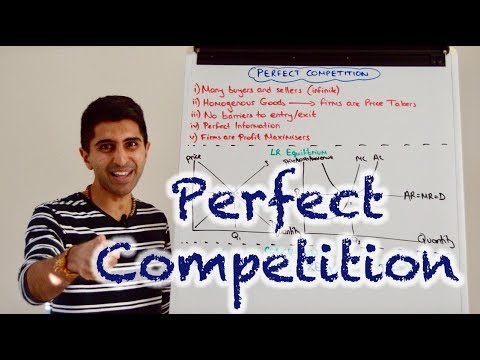 ▶ Topic lesson
A lesson on this topic · by EconplusDal. Tap the picture to open it on YouTube.
Solutions follow the official Cambridge mark schemes; marks are shown in grey. Videos are from other YouTube channels. Paper codes read component / series / year: M/J = May/June, O/N = October/November. Past-paper questions © UCLES, reproduced for classroom practice.