Q4 · 9701/11/M/J/23 Q2
Worked solution from the Chemical bonding MCQ booklet.

Worked solution
Calcium and barium are both Group 2 metals with metallic bonding. We need to explain why calcium has the higher melting point.
Both metals give 2 delocalised electrons per atom, so the charge on the cations is the same (2+). But Ca2+ is smaller than Ba2+, so the positive charge is closer to the delocalised electrons. The attraction between the ions and the delocalised electrons is stronger in calcium.
More energy is needed to break the lattice, so the melting point is higher.
So the answer is A.
B says calcium is partly giant molecular, but it is a metal with giant metallic bonding. C says calcium has more delocalised electrons, but both give two per atom. D talks about repulsion between atoms; melting point depends on the attraction between ions and delocalised electrons.
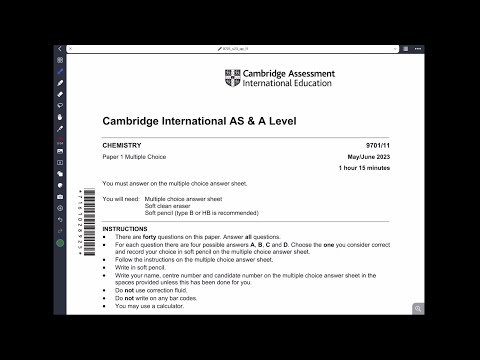 ▶ Whole paper
Video solution of the whole paper · by JMXZ. Tap the picture to open it on YouTube.
Solutions follow the official Cambridge mark schemes. Videos are from other YouTube channels. Paper codes read component / series / year: M/J = May/June, O/N = October/November. Past-paper questions © UCLES, reproduced for classroom practice.