Q21 · 9708/23/M/J/20 Q3
Worked solution from the Government macroeconomic intervention Theory (Paper 2) booklet, Part 3 of 4.

Worked solution
(a)
Explain means: give the consequences and say why. Focus on the fact that the rise was sharp and unexpected.
Write: inflation is a sustained rise in the general price level. [1]
So a higher rate of inflation means prices are rising faster than before. [1]
Consumers: prices rise faster, so the purchasing power of money falls; people can afford fewer goods and services, especially those on fixed incomes or whose wages do not rise as quickly (real income falls). [2]
Firms: costs such as wages and raw materials rise, so profits may fall, and higher prices may make their exports less competitive and reduce sales abroad. [2]
Unexpected: because the rise was not expected, people and firms could not plan: wages and prices may already be fixed in contracts, savers lose because the real value of savings falls, and firms may make poor decisions on prices and investment. [2]
(b)
Discuss means: explain how higher interest rates might reduce inflation, what is good and bad about this, compare with other policies, then decide.
Interest rates: a substantial rise in interest rates makes borrowing more expensive and saving more attractive, so consumer spending and investment fall, aggregate demand falls, and the rate of inflation falls. [1]
Advantage: the central bank can change interest rates quickly and it is aimed directly at spending in the whole economy, so it can be effective against demand-pull inflation. [1]
Disadvantage: higher rates reduce growth and employment, raise costs for firms with loans, and can raise the exchange rate which hurts exporters. [1]
Disadvantage: there are time lags before higher rates take effect, and they may not work if the inflation is cost-push. [1]
Other policy: deflationary fiscal policy, such as raising taxes or cutting government spending, also reduces aggregate demand and so reduces inflation. [2]
Supply-side policy, such as training or more competition, increases productivity and aggregate supply, which lowers costs and prices over time without cutting output. [2]
Evaluation: interest rates are likely to work faster than supply-side policy, but supply-side policy avoids lost output and is better for cost-push inflation; fiscal policy is slower to change and politically harder. [1]
Evaluation: which policy is best depends on the cause of inflation (demand-pull or cost-push) and on how much spending responds to interest rates. [1]
Evaluation: a sharp, unexpected rise suggests action is needed fast, which favours interest rates, though the cost in lost output may be large. [1]
Conclusion: a substantial rise in interest rates is most likely to succeed if the inflation is demand-pull and a quick result is needed, but it is not always the best; a combination with other policies is likely to be better. [1]
Official mark scheme

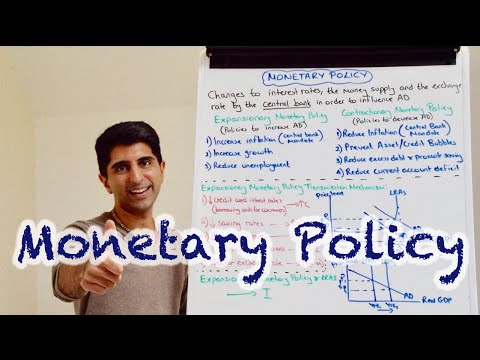 ▶ Topic lesson
A lesson on this topic · by EconplusDal. Tap the picture to open it on YouTube.
Solutions follow the official Cambridge mark schemes; marks are shown in grey. Videos are from other YouTube channels. Paper codes read component / series / year: M/J = May/June, O/N = October/November. Past-paper questions © UCLES, reproduced for classroom practice.