Q9 · 9700/41/O/N/21 Q4
Worked solution from the Genetic technology Theory (Paper 4) booklet, Part 1 of 3.

Worked solution
(a)(i)
The question asks why PCR may be needed first.
Write: DNA at a crime scene may be present in a very small amount. [1]
PCR amplifies (copies) the DNA so there is enough to profile. [1]
(a)(ii)
Think about the charge and size of DNA fragments in a gel.
DNA is negatively charged, so it moves towards the positive electrode (anode). [1]
Smaller (lighter) fragments move faster and further, so fragments separate into bands. [1]
(b)(i)
The question asks why the GEDmatch database worked so well. Give any two.
The GEDmatch database is larger than the police database. [1]
The police database only holds people convicted or suspected of crime, while GEDmatch has data for innocent people with no reason to hide their DNA; this gives multiple leads to guilty people. [1]
(b)(ii)
Match GEDmatch to the meaning of bioinformatics. Give any two points.
It stores a large quantity of DNA / genome data. [1]
The data is analysed / processed by computer software or algorithms to find matches. [1]
(b)(iii)
The question asks for social and ethical comments. Give any two.
Social: it helps police catch and imprison criminals, making society safer. [1]
Ethical: sharing your own DNA data also shares your relatives' data without their consent (privacy). [1]
Official mark scheme

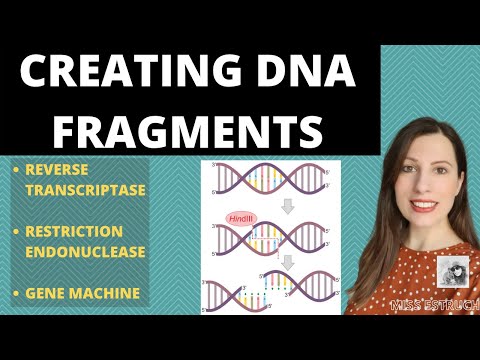 ▶ Topic lesson
A lesson on this topic · by Miss Estruch Biology. Tap the picture to open it on YouTube.
Solutions follow the official Cambridge mark schemes; marks are shown in grey. Videos are from other YouTube channels. Paper codes read component / series / year: M/J = May/June, O/N = October/November. Past-paper questions © UCLES, reproduced for classroom practice.