Q6 · 7707/21/M/J/23 Q2
Worked solution from the Accounting procedures Theory (Paper 2) booklet, Part 2 of 5.

Worked solution
(a)(i)
Provision at 31 Dec 2021 = 4% × $75 000 = $3 000. Provision needed at 31 Dec 2022 = 4% × $77 000 = $3 080. Increase = $80.
Provision for doubtful debts account
| Date | Details | $ | Date | Details | $ |
|---|---|---|---|---|---|
| 31 Dec 2022 | Balance c/d | 3 080 | 1 Jan 2022 | Balance b/d | 3 000 [1] |
| 31 Dec 2022 | Income statement | 80 [1] | |||
| 3 080 | 3 080 | ||||
| 1 Jan 2023 | Balance b/d | 3 080 [1] |
(ii)
Write any two of these:
Not all trade receivables will pay, so it anticipates irrecoverable debts. [1]
To apply prudence: profit and trade receivables are not overstated. [1]
(Also accepted: matching, so the expense falls in the year of the sale.)
(b)
Depreciation is charged for a full year in the year of purchase (2020) and none in the year of sale (2022), so two years: 2020 and 2021.
2020: 25% × $16 000 = $4 000. 2021: 25% × ($16 000 − $4 000) = 25% × $12 000 = $3 000.
| Details | $ |
|---|---|
| Cost | 16 000 [1] |
| Less provision for depreciation (4 000 + 3 000) | 7 000 [1] |
| Net book value | 9 000 |
Gain = proceeds − net book value = $9 500 − $9 000 = $500 [1]
Proceeds are more than the net book value, so it is a profit on disposal. [1]
(c)(i)
Motor vehicles account
| Date | Details | $ | Date | Details | $ |
|---|---|---|---|---|---|
| 1 Jan 2022 | Balance b/d | 48 000 | 31 Dec 2022 | Disposal | 16 000 [1] |
| 31 Dec 2022 | Balance c/d | 32 000 | |||
| 48 000 | 48 000 | ||||
| 1 Jan 2023 | Balance b/d | 32 000 | – [1] |
(ii)
Depreciation for 2022 = 25% × ($32 000 − ($21 000 − $7 000)) = 25% × $18 000 = $4 500.
Provision for depreciation on motor vehicles account
| Date | Details | $ | Date | Details | $ |
|---|---|---|---|---|---|
| 31 Dec 2022 | Disposal | 7 000 | 1 Jan 2022 | Balance b/d | 21 000 [2] |
| 31 Dec 2022 | Balance c/d | 18 500 | 31 Dec 2022 | Income statement | 4 500 [2] |
| 25 500 | 25 500 | ||||
| 1 Jan 2023 | Balance b/d | 18 500 | – [1] |
(d)
Building the extension and equipment ready for use is capital expenditure. Running costs and small items are revenue expenditure.
| Item | Capital expenditure | Revenue expenditure |
|---|---|---|
| Legal fees for obtaining permission to build the extension | ✓ | – |
| Building costs for the extension | ✓ | – [1] |
| Insurance for the office | – | ✓ |
| Painting the office extension | ✓ | – [1] |
| Office calendar for 2023 | – | ✓ |
| Purchase of office equipment | ✓ | – [1] |
| Installation of office equipment | ✓ | – |
| Stationery for office | – | ✓ [1] |
Official mark scheme

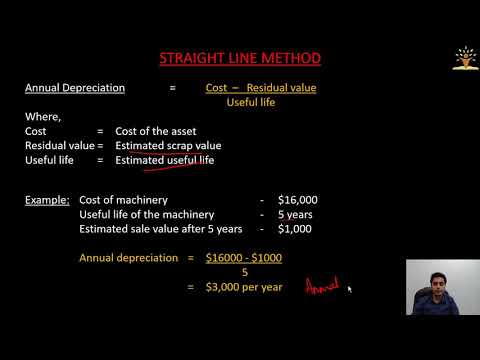 ▶ Topic lesson
A lesson on this topic · by Edex World. Tap the picture to open it on YouTube.
Solutions follow the official Cambridge mark schemes; marks are shown in grey. Videos are from other YouTube channels. Paper codes read component / series / year: M/J = May/June, O/N = October/November. Past-paper questions © UCLES, reproduced for classroom practice.