Q47 · 9700/42/F/M/21 Q3
Worked solution from the Genetic technology Theory (Paper 4) booklet, Part 3 of 3.

Worked solution
(a)
The question asks how to put a carotene-making gene into rice. Think of the usual genetic engineering steps.
Write: the gene(s) for making carotene are obtained from another species (for example daffodil, maize or bacteria). [1]
Cut the gene out with a restriction enzyme (restriction endonuclease). [1]
Insert the gene into a plasmid / vector (or fire it in with a gene gun) and seal it with DNA ligase, making recombinant DNA. [1]
The recombinant DNA is inserted into rice cells / embryos / the rice genome. The gene is then transcribed and expressed to make the enzymes that make carotene in the grain. (Extra detail such as adding a promoter also scores.) [1]
(b)
The question asks for social and ethical reasons why GM rice should not be opposed. Use the facts given.
Work out how much rice meets the RDA: 400 μg ÷ 12 μg per g = 33.3 g (about 33–34 g) of rice per day, a small and realistic amount. [1]
GM rice would help prevent childhood blindness. [1]
It would help prevent the deaths of children (1.15 million a year). [1]
Any one of these: the seeds are affordable (same cost as normal rice); the rice is scientifically proven safe; continuing to campaign would waste government money; it is plant-based, so no animal welfare concerns; benefits outweigh concerns. [1]
Official mark scheme

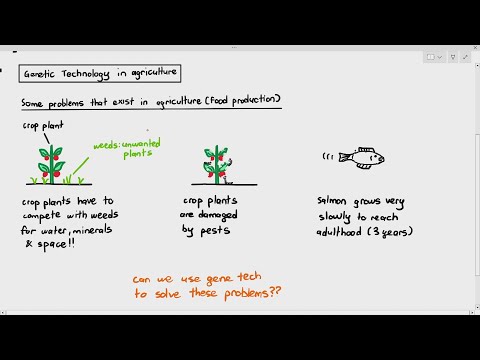 ▶ Topic lesson
A lesson on this topic · by OtterBioTutor. Tap the picture to open it on YouTube.
Solutions follow the official Cambridge mark schemes; marks are shown in grey. Videos are from other YouTube channels. Paper codes read component / series / year: M/J = May/June, O/N = October/November. Past-paper questions © UCLES, reproduced for classroom practice.