Q8 · 9700/42/O/N/20 Q7
Worked solution from the Homeostasis Theory (Paper 4) booklet, Part 1 of 2.

Worked solution
(a)
The question asks where insulin receptors are and what they are made of. Insulin is a hormone that cannot enter cells easily, so its receptor sits on the outside of the cell.
Write the location: cell surface membrane (plasma membrane). [1]
Write the molecule: glycoprotein (protein or polypeptide is also accepted, but not channel protein). [1]
(b)(i)
Read the graph: at 90 s the activity is 5 arbitrary units and at 180 s it is 19 arbitrary units.
Percentage increase = (19 − 5) ÷ 5 × 100 [1]
= 14 ÷ 5 × 100 = 280% [1]
(b)(ii)
Glycogen synthetase makes glycogen from glucose, so it removes glucose from the blood.
Write: it catalyses glycogen production, so the blood glucose concentration decreases. [1]
Official mark scheme

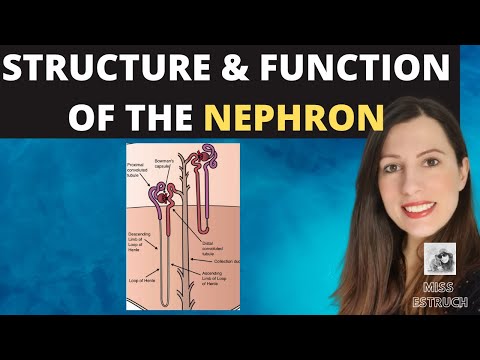 ▶ Topic lesson
A lesson on this topic · by Miss Estruch Biology. Tap the picture to open it on YouTube.
Solutions follow the official Cambridge mark schemes; marks are shown in grey. Videos are from other YouTube channels. Paper codes read component / series / year: M/J = May/June, O/N = October/November. Past-paper questions © UCLES, reproduced for classroom practice.