Q2 · 9700/41/M/J/20 Q1
Worked solution from the Homeostasis Theory (Paper 4) booklet, Part 1 of 2.

Worked solution
(a)
ACTH is a first messenger that acts like adrenaline: it binds outside the cell and a second messenger acts inside. Describe the stages in order. Any five points score:
ACTH binds to a receptor on the cell surface membrane of the adrenal gland cells. [1]
A G protein is activated. [1]
Adenylyl cyclase is activated. [1]
Cyclic AMP is made from ATP. [1]
Cyclic AMP is the second messenger. [1]
(Other points that also score if you use them instead: cyclic AMP binds to a kinase enzyme; an enzyme cascade / activation of enzymes by phosphorylation; the signal is amplified; this results in synthesis of cortisol.)
(b)
Cortisol high leads to less ACTH, which reverses the change.
Write: negative feedback. [1]
(c)
A tumour is a group of cells that divide when they should not. Any two of these:
Uncontrolled mitosis (continuous cell cycle, cell cycle checkpoints not controlled). [1]
An abnormal mass of cells is formed. [1]
(Also accepted: no programmed cell death (no apoptosis, cells immortal); mutation of a tumour suppressor gene or (proto)oncogene.)
(d)
Write one other cause of thirst. Any one of these:
The water potential of the blood has decreased. [1]
(Also accepted: eating food with a high salt content; excessive panting because of increased body temperature; diabetes.)
Official mark scheme

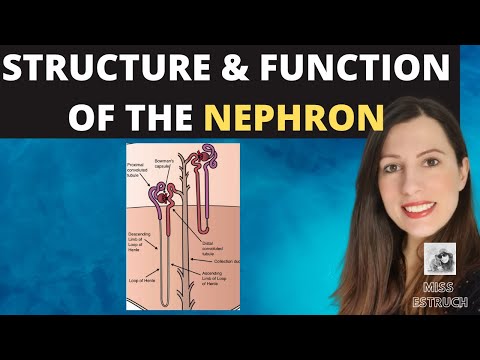 ▶ Topic lesson
A lesson on this topic · by Miss Estruch Biology. Tap the picture to open it on YouTube.
Solutions follow the official Cambridge mark schemes; marks are shown in grey. Videos are from other YouTube channels. Paper codes read component / series / year: M/J = May/June, O/N = October/November. Past-paper questions © UCLES, reproduced for classroom practice.