Q13 · 9700/43/M/J/21 Q8
Worked solution from the Selection and evolution Theory (Paper 4) booklet, Part 2 of 3.

Worked solution
(a)
Stabilising selection keeps the average phenotype.
Individuals with intermediate phenotypes are more likely to survive and reproduce (selected for). [1]
Individuals with extreme phenotypes die or are selected against. [1]
It happens when there is no change in the environment. [1]
(b)(i)
Write: white and black mice have poor camouflage against the mid-brown soil. [1]
So they are more easily seen by predators and eaten (predation). [1]
(b)(ii)
Sketch a new bell curve on Fig. 8.1.
Draw a narrower curve than the original. [1]
Place it to the right, with its peak at dark brown. [1]
(c)
Write: genetic drift is a random / chance change in allele frequency (some alleles are not passed to the next generation). [1]
It has a larger effect in a small population. [1]
Official mark scheme

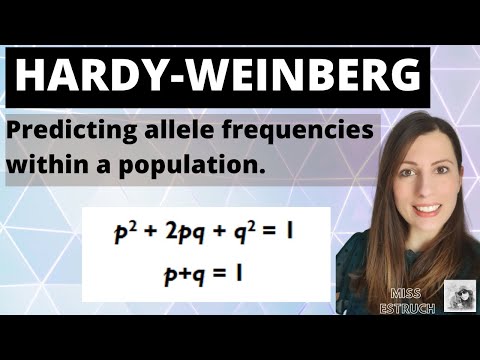 ▶ Topic lesson
A lesson on this topic · by Miss Estruch Biology. Tap the picture to open it on YouTube.
Solutions follow the official Cambridge mark schemes; marks are shown in grey. Videos are from other YouTube channels. Paper codes read component / series / year: M/J = May/June, O/N = October/November. Past-paper questions © UCLES, reproduced for classroom practice.